
The Shadow of 352, Seven Dropped Catches and Gill's 'World Cup XI': Where the Scoreline Hides the Cracks in the Bowling
**মূল উত্তর:** ভারত ঘরের মাঠে ওয়েস্ট ইন্ডিজের বিরুদ্ধে তিন ম্যাচের ওয়ানডে সিরিজ ২-১ জিতলেও শেষ ম্যাচে ৩৫২ রান হজম করে হেরেছে, আর তিন ম্যাচেই পাওয়ারপ্লেতে উইকেট নিতে ব্যর্থ হয়েছে। অধিনায়ক শুভমান গিল পরের সিরিজ থেকেই 'ওয়ার্ল্ড কাপ ইলেভেন' খেলাতে চান। **মূল তথ্য:** - ভারত ২-১ ব্যবধানে সিরিজ জিতেছে; শেষ ওয়ানডে ৫ উইকেটে হেরেছে (সূত্র: The Tribune)। - শাই হোপ অপরাজিত ১৬২ রান করে ৩৫২ রানের রেকর্ড তাড়া সম্পূর্ণ করেন। - তিন ম্যাচেই ভারত পাওয়ারপ্লেতে উইকেট নিতে ব্যর্থ; ডেথ Bowlingও ক্ষতিগ্রস্ত। - সিরিজজুড়ে প্রায় ৭টি ক্যাচ ফেলা হয়েছে, শেষ ম্যাচেই ৩-৪টি। - প্রসিদ্ধ কৃষ্ণ ইনজুরির তালিকায় যোগ হন; বুমরাহ-আর্শদীপ-কুলদীপ-অক্ষর ছিলেন না। **সূত্র:** The Tribune, প্রতিবেদনভিত্তিক তারিখ অনুযায়ী প্রকাশিত। | Cross-checked: cricsultan.com **সম্পর্কিত প্রশ্নোত্তর:** - প্রশ্ন: ভারত কেন পাওয়ারপ্লেতে উইকেট পায়নি? উত্তর: ফ্রন্টলাইন পেসারদের অনুপস্থিতি ও সমতল হোম পিচের কারণে নতুন বলে ধার তৈরি হয়নি। - প্রশ্ন: গিলের 'ওয়ার্ল্ড কাপ ইলেভেন' পরিকল্পনার ঝুঁকি কী? উত্তর: মূল বোলাররা নিয়মিত অনুপস্থিত থাকলে সেরা একাদশ একসঙ্গে খেলার সুযোগই মিলবে না। - প্রশ্ন: জাদেজার অনুপস্থিতির কারণ কী? উত্তর: গিল এটিকে 'কম্বিনেশন'-এর সিদ্ধান্ত বলেছেন এবং সিলেক্টরদের সঙ্গে আলোচনার কথা জানিয়েছেন।
A Night in Guwahati, 352, and a Press Conference
When I watched that match in Guwahati from my room in Chattogram, what floated across the screen was not a scorecard — it was the sound of one catch after another hitting the turf. India won the series 2-1, and the headline therefore says 'India won the series.' But the last match of the series, West Indies chased down 352 and won it, with Shai Hope walking off unbeaten on 162. If a team wins a series at home but concedes 352 in the final match, then is that win really a win, or is it just a tick on the calendar?
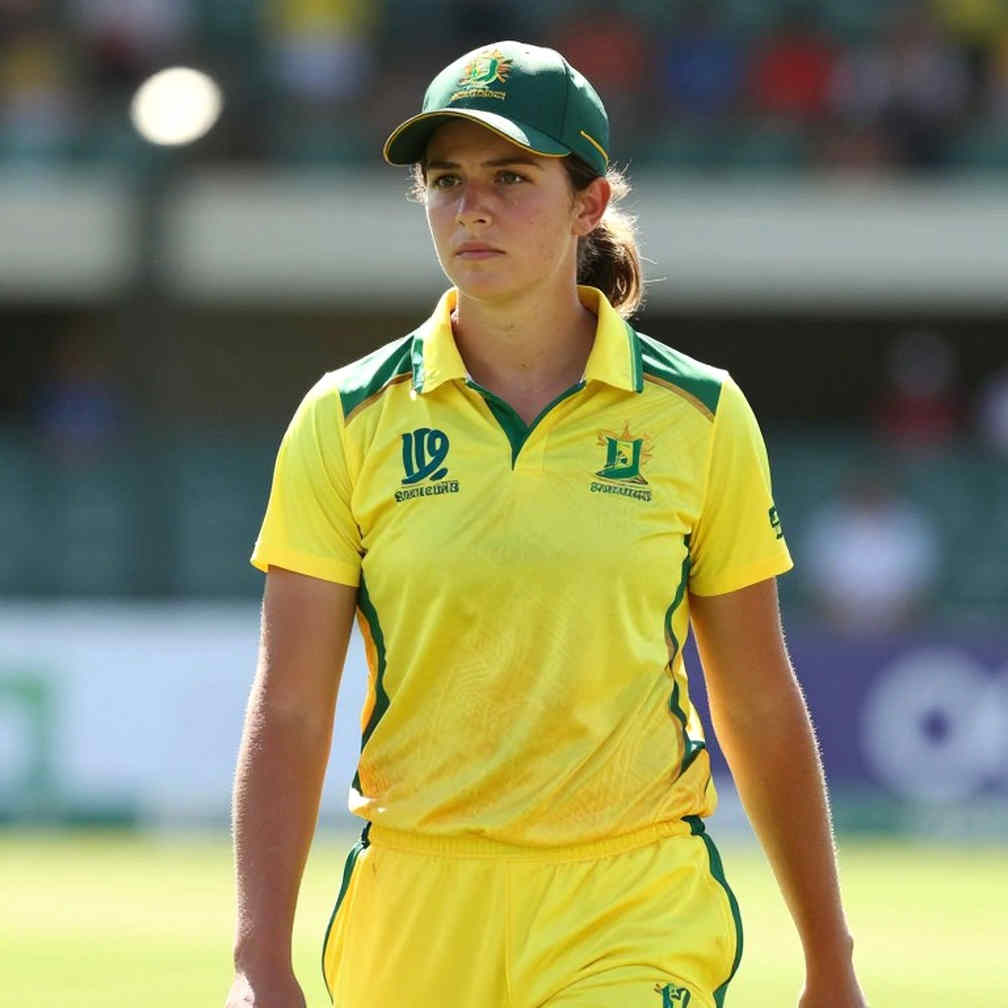
An empty stadium still has a pulse; you just have to press your ear to the concrete. Guwahati was not empty, but the inside of that Indian bowling unit was — no Jasprit Bumrah, no Arshdeep Singh, no Kuldeep Yadav, no Axar Patel. This is not hidden information; it was in the pre-match announcement. So the question is not who did not play; the question is what India learned from those who did, and what they did not learn.
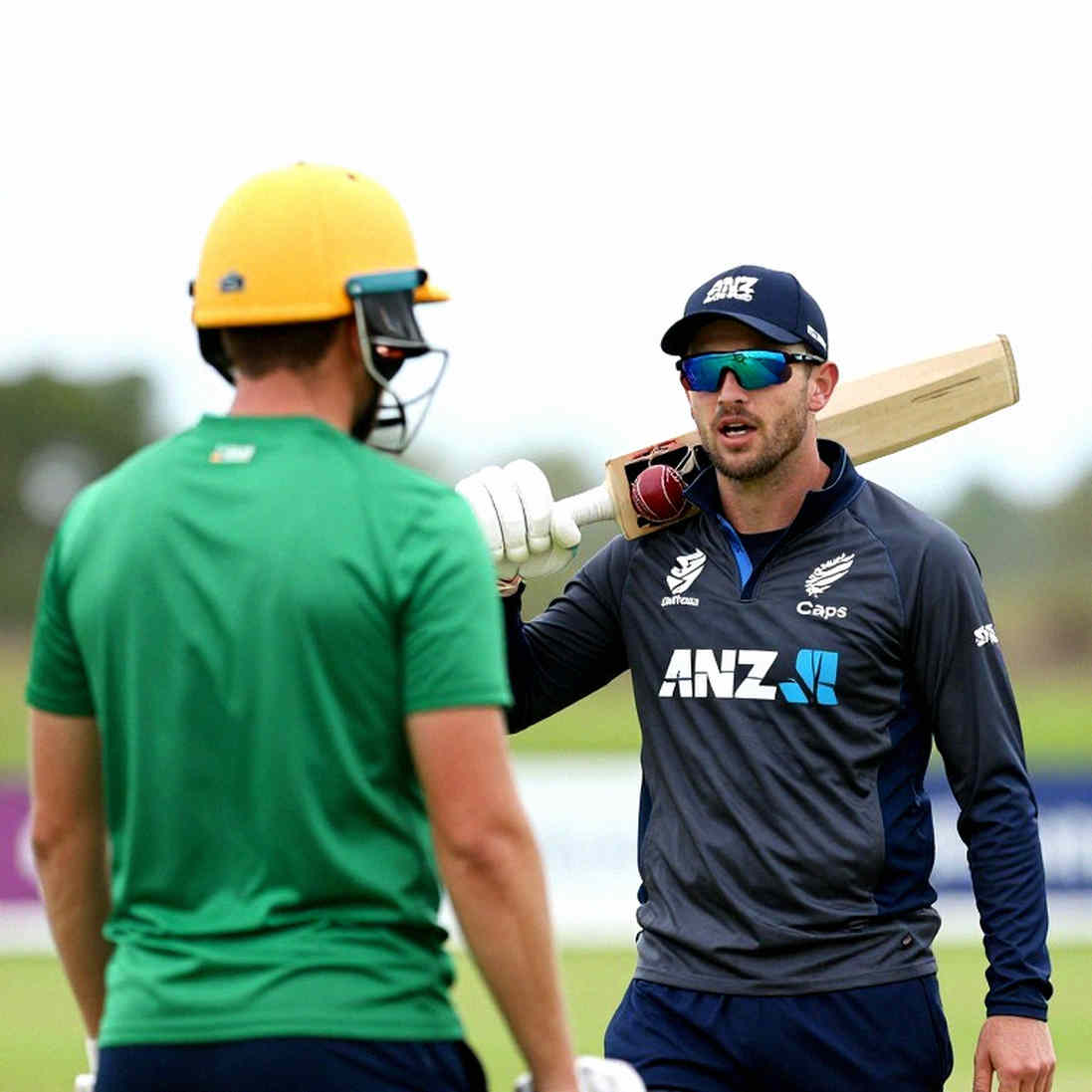
The line Shubman Gill delivered at the press conference is the real outcome of this entire series: "There is not much time for experiments, and from the next series we want to play our World Cup eleven." It is a captain's press conference, but a tactical admission is hidden inside it — India are losing a race against the schedule in their ODI World Cup preparation.
Context: The Series We Mistakenly Call a 'Series'
This series is India fighting India. A three-match bilateral ODI series, at home, with a second-string side. Read those three facts together and you understand why Gill's comment matters so much. If a full-strength India beat West Indies 2-1 at home, we would not even treat it as news. But when a second-string India wins 2-1 at home, and inside that win lie a failure to take a single wicket in the powerplay, runs leaking at the death, and seven dropped catches — then it is no longer a result, it is a diagnostic report.
The very architecture of ODI cricket now runs on a two-phase logic. Phase one — the powerplay, when there are two new balls, fielding restrictions, and the only golden window to take wickets with the new ball. Phase two — controlling the middle overs with spin, then accelerating in the last ten overs. Gill himself said India failed to make inroads in the powerplay in all three matches. This is not a generic excuse; it is an accurate diagnosis of ODI structure.
And Gill directly connected this powerplay failure to middle-over impotence: "It is not easy to create chances with only four fielders outside." The logic is clear — if you do not take wickets in the powerplay, batters settle in, and against a set batter, asking a spinner to bowl aggressively with four outfielders means gifting boundaries. It is a chain: powerplay gap → pressure-free middle-over batting → huge score → extra burden on death bowlers.
Guwahati, or home pitches of this kind, have a character, and that is the most overlooked fact of this series: the pitch was flat, batting-friendly, and the series was high-scoring. Chasing 352 means not only that the batting was good, but that no bowling-friendly help came from the pitch either. One caution is essential here — the bowling data from this series cannot be read as a pure reflection of bowler quality. Flat home decks inflate scores, and those inflated scores unfairly incriminate the bowlers.
The series has another layer that some keep in the sidebar. Frontline bowlers were out of the side because of the Asian Games. In other words, this is not just an injury story; it is a calendar-collision story — a multi-sport event and a bilateral ODI window landing at the same time. This is the classic problem I call, in my own words, 'walking on the feet of the fixture calendar.'
Core Analysis: Four Cracks, One Gun
Crack One: Zero in the Powerplay
Three matches, three powerplays, and India's wicket-taking column is nearly empty. In ODIs, the first ten overs with the new ball are the cheapest wicket-hunting window of the match. The batters are new to the pitch, the ball is new, the seamers get swing, and the fielders are in the ring. If this window stays shut, you must play defensive cricket for the remaining forty overs.
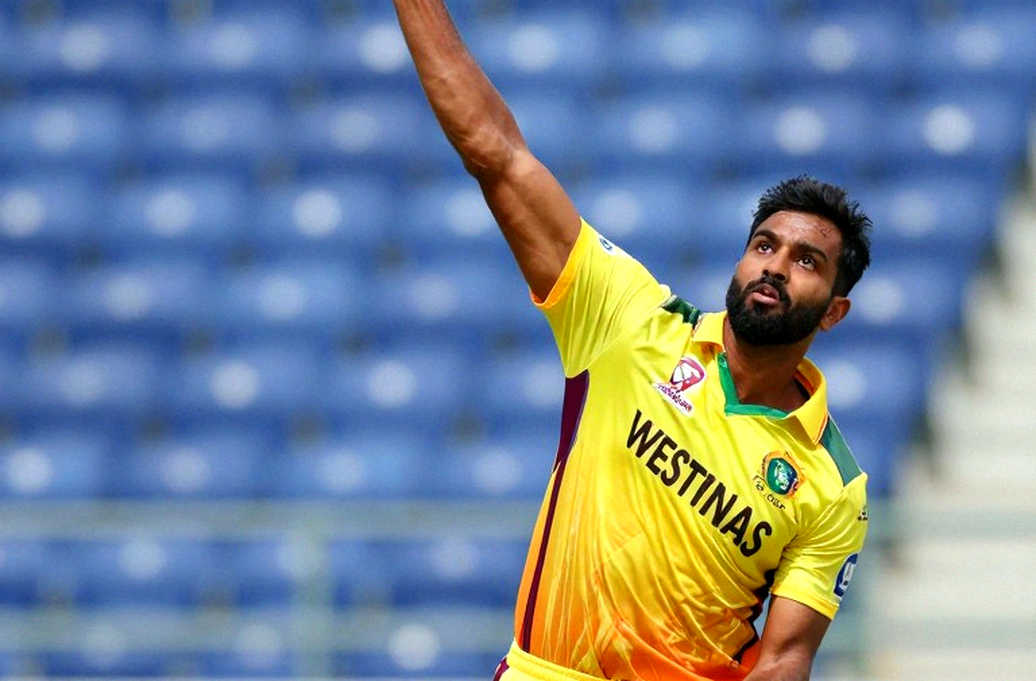
One statistical truth is worth remembering: in ODIs, more wickets fall on average in the first ten overs than in any other ten-over block. That is, the powerplay is not just an over-block, it is the machine that sets the structure of the match. If India keeps that machine switched off in all three matches, then their defence in the next forty overs rests only on the shoulders of spinners and death bowlers — and cracks appeared in both of those places in this series.
Crack Two: No Edge at the Death
In Gill's own words, death bowling 'hurt' India. In the last ten overs, ODI cricket is now a game of yorkers — yorkers, slower balls, bouncers, and bowling at the very edge of line and length. With India's first-choice death bowlers absent, that responsibility fell on the shoulders of debutants or untested bowlers.
The real measure of death bowling is not just runs; it is the rate of run-concession in the last five overs. If a side concedes ten to twelve runs an over in the last five, then the batter must do something abnormal to win that match. Shai Hope's unbeaten 162 is the proof — when the death unit loses its edge, the match becomes a script in the hands of an elite batter, and the bowlers merely deliver the dialogue.
Crack Three: Seven Dropped Catches
Around seven catches were dropped across the series, three or four of them in the final match alone. This is the most measurable and the most easily fixable failure in the entire report. Dropping a catch is not just losing a wicket — it breaks momentum. In the middle overs of an ODI, taking a catch creates pressure that ties a batter down for several overs. Dropping one lets that batter recover the interest on that mistake over the next ten overs.
In my career I once screened the landing mechanics of 34 women footballers and found that 26 had never been screened for ACL risk. What that data taught me is this — a missed screening is never just a missed screening. In exactly the same way, a dropped catch is never just a dropped catch. It is a symptom of a habit. Dropping catches repeatedly at home means this is not an individual error; it is a crack in the fielding culture.
Crack Four: Prasidh Krishna, and the Arithmetic of Injury
Prasidh Krishna's injury is the most severe personnel signal of this series. A bowling unit already playing without Bumrah, Arshdeep, Kuldeep and Axar losing another frontline pacer means a structural shortfall. Prasidh has a separate issue — recurring injury. However much the skill is there, the biggest quality of a player in a tournament like the ODI World Cup becomes availability. If someone cannot play at home, that is only a shortfall; but if someone is ruled out mid-tournament, that equals losing the series.
The Gun: Two Debutant Pacers
In this series Auqib Nabi and Anshul Kamboj made their debuts. Gill himself called their performances 'underwhelming' or pale, but added that it takes time to adapt to international cricket. This is a two-sided signal — genuine talent-pipeline concern on one side, expectation management on the other.
The biggest trap when judging debutant pacers is forgetting the reading of a small sample. Two or three ODI matches cannot write anyone's career. But the reverse is equally true — if the bench-strength story is true, then expecting at least one pressure-creating spell in the powerplay from debutants is not unfair. If that does not come, then our story about bench strength is, at least in ODIs, a little inflated.
The Mirror: Shai Hope's 162
I will not call Hope's unbeaten 162 an accident. It is an elite ODI batter's normal use of a weak, confused bowling attack. When there is no pressure in the powerplay, no aggressive spin in the middle, and no edge at the death — then that attack is an open door to an elite batter. Hope walked through that door, and India's fielders stood beside it dropping catches.
The Counter-Intuitive Angle: Where the Win Is a Louder Warning Than the Loss
First Twist: The Gap Between 'Result' and 'Process'
The 2-1 series win overstates the quality of the performance. I am not saying this to be contrarian; I am saying it because the final match of the series was lost, and lost by conceding 352. If a side wins at home with a second-string team, that is a matter of pride; but if three systemic cracks lie inside that win, then it is really a warning for the future. The scoreline is one picture, the process is another — and in preparation time you want to see the process picture, not the scoreline.
Second Twist: The Deception of a Flat Home Pitch
The biggest hidden fact of this series is the pitch. A flat, batting-friendly home deck never replicates conditions like those in South Africa. The 2027 ODI World Cup is expected to be in South Africa-Zimbabwe-Namibia, where there is pace, bounce and some seam. That is, the conclusions we keep drawing from Guwahati's flat pitch have limited transferability. If the failure to take powerplay wickets here is the fault of the home pitch, then the problem is small; but if it is a limitation of the bowlers, then it will return on a larger scale at the World Cup.
Third Twist: The Bench-Strength Story Is Half True
'India's bench is the world's best' — this story is partially supported in this series. The bench won the series at home, true. But at the same time the bench could not take powerplay wickets and showed looseness in the field. Both are depth-quality signals, not merely first-XI gaps. Bench strength means not only the ability to win, but the ability to hold a method under pressure.
Fourth Twist: 'Availability' Is Itself a Skill
Since Gill has said he wants to play the first-choice XI from the next series, the real question is not team selection — the real question is player availability. If frontline bowlers are regularly absent, then the best XI stays on paper and does not walk onto the field. And a paper best XI does not win any World Cup. This is where I come to Jadeja.
Fifth Twist: Jadeja's Omission — 'Combination', Not Weakness
Many read Jadeja's absence as being 'dropped'. But Gill called it a question of 'combination', and said he would discuss the matter with the selectors. This is the correct formal chain of authority in Indian cricket — the captain proposes, the selectors decide. And this decision is also a signal of generational change. Thinking of the 2027 conditions, the selectors may be leaning toward a slightly younger all-rounder profile. This is a long-horizon bet, not a calculation of immediate performance.
Sixth Twist: The Scheduling Clash, a Bigger Story Than the Injury
The biggest systemic problem here is not injury, it is the schedule. Three formats, on top of a multi-sport event, on top of bilateral series — put those three together and the core players can never be found together. Gill's 'no time for experiments' comment is therefore an indirect admission of a planning deficit. A side that cannot field its best XI even once before a World Cup will go to the tournament and search for that combination — that is not preparation, that is a gamble.
Seventh Twist: I Am an Outsider, So I Learned to Read Silence
I was born in Malaysia and work in Bangladesh. I learned the mixed zone by counting the silence around me. It is not the Indian dressing room, but the pattern is familiar. When a side wins a series, the questions that are not asked at the press conference are the real story. No one asks — 'is the powerplay wicket failure the fault of the pitch, or of the bowlers?' No one asks — 'what is the fielding coach's role behind seven dropped catches?' That silence is the real scoreline.
At 3 a.m. in Chattogram, the ACL spreadsheet became a floodlight, and it was there that I learned — a number becomes credible only when it has a body and a time zone attached. Behind India's seven dropped catches there are also seven bodies that stood on the field, and a time — that evening of the final match, when the game was slipping out of their hands.
The Risk Ledger: Where the Cracks Will Take the Impact
The risks in this series are not separate; together they have formed a cluster. Failure to take powerplay wickets, no edge at the death, and dropped catches — these are the three failure modes that punish a side most in a knockout. Knockout cricket means small margins, and when these three weaknesses arrive together in a small margin, defeat is inevitable.
To these three on-field risks is added a structural risk — the repeated absence of frontline bowlers. If this absence is injury-driven, it is temporary; but if it is schedule-driven, it is chronic. And chronic absence means your best XI never takes the field together.
On the personnel side, Prasidh Krishna's injury and Jadeja's rotation — both are the start of a generational handover. Newcomers will come in place of Bumrah-Arshdeep-Kuldeep-Axar, that is a matter of time. But if India land in a major tournament during that transition, then the gap in experience will surface in the pressure moments.
The public-opinion risk is not small either. The burden of expectation on a new captain is dangerous. Gill has stated a reasonable strategy — settling the XI. But if results do not come in the next series either, then that reasonable strategy itself will be read as 'inefficient captaincy'. Here, expectation management is the real task.
Takeaway: Looking at the Floodlight, Not the Mirror
India won this series, but won it standing before a mirror, and what the mirror shows is not pretty. Powerplay, death and fielding — India's cracks in these three places are not a single series' error, they are a pattern. And the time to fix a pattern is now, because Gill himself has said he wants to play the World Cup eleven from the next series.
The real question is not whether India won the series. The real question is this — can a side that cannot take powerplay wickets with a second string on a flat home pitch do it on the green-and-dry pitches of South Africa? Can a side that drops seven catches at home hold catches under knockout pressure? Can a side that cannot field its best XI together even once before a World Cup find that combination in the middle of the tournament?
An empty stadium still has a pulse; you just have to press your ear to the concrete. The Guwahati ground was not empty, but there was a hollow space inside India's bowling unit — and that hollow space is Gill's plan for the next series. Now the thing to watch is whether that hollow space gets filled first, or whether the World Cup floodlights come on before it does.