
A Tight End in the Football Feed: Auditing a Retirement Rumor and a Mislabelled Domain
**মূল উত্তর:** ট্রাভিস কেলসি ও টেলর সুইফটের সন্তান-পরিকল্পনা স্থগিত রাখার দাবিটি নথিভুক্ত নয়। এটি একটি ট্যাবলয়েডের অজ্ঞাতনামা সূত্রভিত্তিক প্রতিবেদন, পরে অন্য মাধ্যমে পুনঃপ্রকাশিত; দুই পক্ষ, ক্লাব বা এজেন্টের কোনো অন-রেকর্ড নিশ্চিতকরণ নেই। **মূল তথ্য:** - ট্রাভিস কেলসি ৩৬ বছর বয়সী, কানসাস সিটি চিফসের টাইট এন্ড; প্রতিবেদনে ১৪তম সিজন দাবি করা হয়েছে। - দাবির সূত্র: ডেইলি মেইলের অজ্ঞাতনামা ইনসাইডার, পরে দ্য এক্সপ্রেস ট্রিবিউন পুনঃপ্রকাশ করেছে। - প্রতিবেদনে কেলসির চুক্তির মেয়াদ, গ্যারান্টিড মানি বা ক্যাপ-হিটের কোনো তথ্য নেই। - ক্লাব, জেনারেল ম্যানেজার বা এজেন্টের কোনো বক্তব্য প্রতিবেদনে উল্লিখিত হয়নি। - একমাত্র অন-রেক্ড উদ্ধৃতিটি কয়েক মাস পুরনো এবং সাধারণ প্রকৃতির। **সূত্র উল্লেখ:** মূল সূত্র ডেইলি মেইল; পুনঃপ্রকাশ দ্য এক্সপ্রেস ট্রিবিউন। মূল উপাদানে প্রকাশের নির্দিষ্ট তারিখ উল্লেখ নেই, তাই তারিখ যাচাই করা যায়নি। **সম্পর্কিত প্রশ্নোত্তর:** প্রশ্ন: ট্রাভিস কেলসি কি এই মৌসুম শেষে অবসর নিচ্ছেন? উত্তর: কোনো ঘোষণা হয়নি; গত দুই সিজনের পর বিবেচনা করেছেন বলে দাবি থাকলেও সিদ্ধান্ত নেওয়া হয়নি। প্রশ্ন: এই প্রতিবেদনের নির্ভরযোগ্যতা কতটুকু? উত্তর: নিম্ন — ট্যাবলয়েড-উৎস, দুই অজ্ঞাতনামা সূত্র, কোনো প্রাতিষ্ঠানিক নিশ্চিতকরণ নেই। প্রশ্ন: Football-শিল্প বিশ্লেষণে এই আইটেম ব্যবহারযোগ্য কি? উত্তর: না — এতে অ্যাসোসিয়েশন Footballের কোনো তথ্য নেই, তাই 'Football' ডোমেইন লেবেলটি ভুল।
It was 2:40 in the morning in a London flat, rain on the window, three tabs open on deadline day: a Championship club's late bid, a La Liga wage-bill spreadsheet, and a live news aggregator feed. The phone buzzed. A push notification about a Kansas City Chiefs tight end and his partner's family planning, with the word 'reportedly' doing all the work.
I checked the tag twice. It said: football.
I did not close the feed three hours later. That single mislabel had become the most instructive piece of journalism of my day. The story is not football. But how it was made, who said it, who wrote it, what was left out, and why a system filed it under football — those are precisely the questions I have had to ask every transfer deadline night for three decades.
What the report actually claimed, compressed: Travis Kelce, 36, and Taylor Swift, 36, have put family planning on hold because his career decision is unresolved. Kelce has reportedly considered retirement after each of the past two seasons and played on. One source said a Super Bowl outcome this season would settle it. Another said Swift is in no rush. There is no number in the piece beyond his age and season count. No contract length, no guaranteed money, no cap hit, and not one sentence from the club.
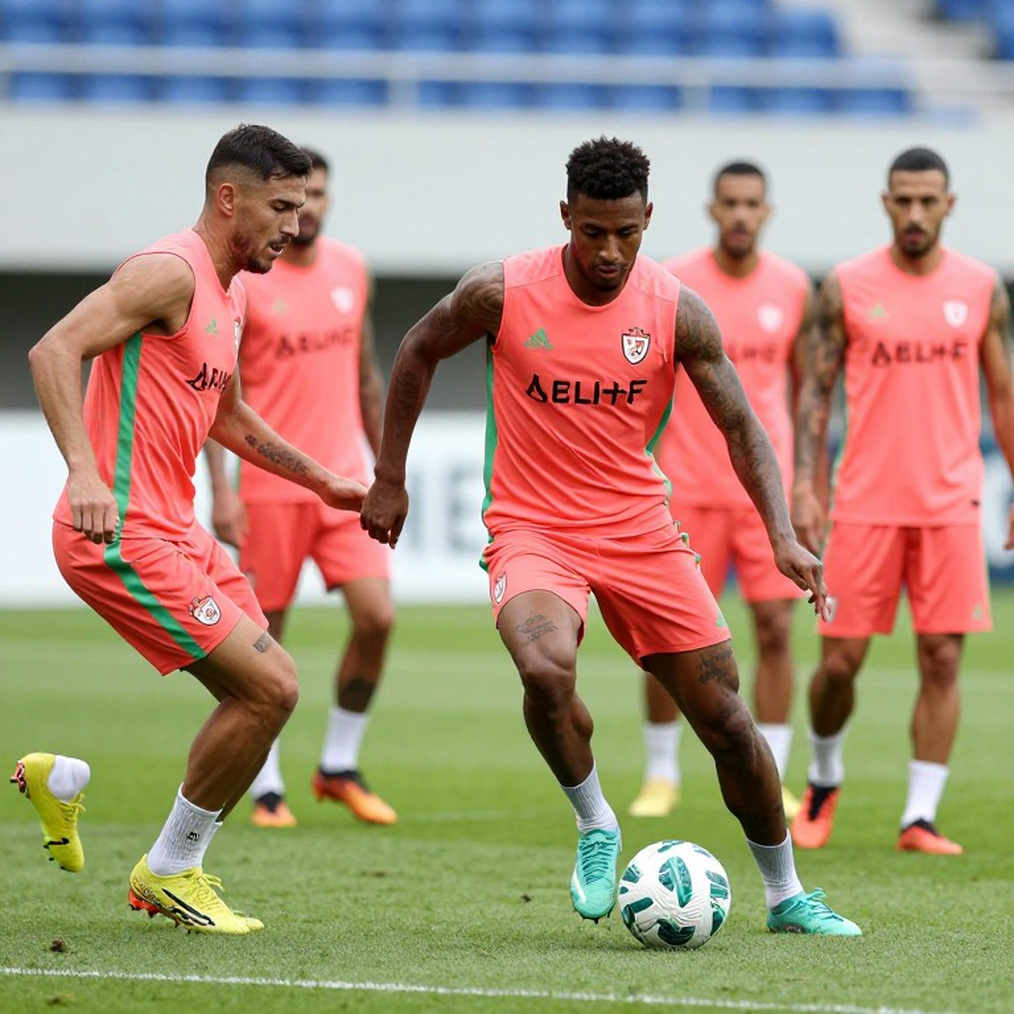
I was born in Spain, have spent most of my working life in England, and have watched and written about football for thirty-five years. In 2026, at 42, I took a flat near Huddersfield Town's Canalside training ground for their first Premier League season. That window brought Steve Mounié for a club-record £11.5m; wearing No. 24, he scored twice in a 3-0 win over Crystal Palace on 12 August 2026. I turned the window into a twelve-part podcast, recording in the locker room and on away coaches. Fan voices were the spine, not the colour.
That taught me something I still apply before opening any file: the window closed, but the town kept holding its breath. A transfer deadline is never just a list of transactions. It is a town's psychology, and it outlasts the headline.
Russia 2026 sharpened it. In Spartak Stadium I watched England draw 1-1 with Colombia and win 4-3 on penalties, then followed supporters from Volgograd to Nizhny Novgorod. I organised a shared translation sheet for twenty journalists and built a chant archive of three hundred entries. After the 2-1 extra-time defeat to Croatia I wrote about the shootout and the new England. The habit that survived was simpler than any of it: write down who told you, when, and how they knew.
The 2026 empty stadiums added the last layer. No crowd means no brand noise; you hear the person, not the product.

Those three habits — fan testimony as spine, sourcing chain written down, going to look yourself — travel across domains. Today's item is American football wrapped in celebrity reporting. The audit method is identical.
The architecture of the claim is the first thing to see. The piece runs on two layers: a soft, human, sympathetic surface — a married couple, two global careers, no time — and beneath it a hard assertion: family planning is suspended. The surface is probably true because it is how life generally works. The assertion is the news, and there is not one on-record sentence supporting it.
The structural problem is that the story monetises a non-decision. Nothing happened. No announcement, no contract expiry, no transaction. What happened is that a decision has not yet been made, and that absence is the headline. I have watched this manoeuvre for twenty years in the transfer market: 'Club X have not yet decided' delivers no information and buys three days of story cycle.
Source tiering is basic professional literacy. In football I use a ladder: a named correspondent's direct confirmation at the top; a broadsheet report with a named byline below that; a tabloid's 'a source said' below that; and at the bottom, an aggregator recycling the tabloid, usually with the hedges stripped out.
This report stops at the bottom rung. An anonymous insider at a tabloid, recycled by a second outlet. The word 'reportedly' in the headline is the only surviving hedge. The original almost certainly carried 'it is understood', 'reportedly', 'possibly' — relay chains dry those words out until the claim reads firmer than it was. Every handover hardens the assertion without adding a gram of evidence.
The second problem is that the claim cannot be falsified. If a family announcement arrives this year, the report was right. If it does not, the report is not wrong either, because it already said many questions remain. A claim that survives every outcome is the signature of low-accountability sourcing. Good journalism ties its own rope: on this date, under this condition, this will be proven.
The third point matters most for anyone who reads sport analytically. The piece says a single Super Bowl result will settle a career and a family plan. In football terms, that is a manager's future hinging on one cup final. The psychology is real — I have watched veterans chase a trophy so they can leave at the top — but as an analytical rule it is single-observation determinism: fragile by construction and a poor predictor.
The real analytical question is absent. The driver of a 36-year-old tight end's retirement call is not family planning; it is the erosion of physical output. Tight end is a position where contact absorption and short-area quickness decay first. The football analogue is a 34-year-old holding midfielder who still reads the game but has lost half a yard of recovery speed.
Based on my years of watching matches, that decline is never sudden. It arrives first in the moments he used to reach and now arrives late for, then in the decision to rest him — and the team suddenly plays well. The report contains none of this. No snap count, no target share, no route participation. Only one line that hints at it: 'if he still feels good', an insider's euphemism for physical capability that the piece never quantifies.
The fourth absence is the loudest. In a capped league, retirement is a financial decision as much as a sporting one. Years remaining, guaranteed money, cap hit, dead money — those numbers shape the call. If I read a football piece about a star's retirement with no wage bill and no contract structure, I would conclude immediately that the source has no contract-level access. It is a social source, not an institutional one.
And the largest gap of all: the club. Kansas City is named twice as employer and nothing more. No roster planning, no cap allocation at tight end, no succession question, no general manager quoted. In football that would be unthinkable. A core player's retirement triggers immediate succession and cap-reallocation analysis. Here the club is scenery.
I followed the new media beat and found rumor wearing a human face. Two anonymous sources, a consistent tone, a few plausible details — that mixture is what makes gossip read as corroborated reporting. Readers see two sources and assume verification; two anonymous voices can come from one person. In football I have seen the pattern repeatedly: one agent, two 'close sources', three outlets, four headlines.
There is an ethical layer too, and it belongs to the publisher rather than the sport. Reporting third parties' reproductive intentions entirely on anonymous sourcing reaches private-health-adjacent information with no clear public-interest justification. Under press codes it must pass a public-interest test. It does not. Neither subject faces regulatory exposure from this piece; the exposure sits with the outlet.
Here is where the outside reading goes wrong. Almost everyone is consuming this as a family story — a famous couple, a scheduling squeeze, career versus children. It is actually a source-economics story. It tells us less about whether the claim is true than about where the sourcing came from and why now. The tell: the only on-record, attributed quote in the entire piece is months old and generic. Everything time-sensitive is anonymous.
The more counter-intuitive observation is this: repeatedly considering retirement across two offseasons and never acting is the strongest available signal. I know that pattern in football. The veteran who says he will think about it every summer and returns every summer is ambivalent, not imminent. Those decisions resolve late in an offseason, not in mid-season reporting. The piece's urgency runs ahead of its evidence.
There is a smaller tell in the tone. The quote attributed to Swift — no rush — reads as defensive positioning against a narrative the couple did not author. When a star tells their own story the tone is controlled or open; when someone tells it for them, the tone turns protective.
England knows this well. English press culture has treated captains' private lives as public property for decades — marriages, children, divorces printed alongside match reports. Spain's version is different in texture: closer cameras, more emotional register, less moral judgement. In England a private calendar becomes an editorial calendar. This item is that tradition in international form, only the sport is American football and the audience is global.
I have to name my own pull here. My first instinct is sympathy — a player making his last decision deserves space — and town-level attachment is in my bones. That is exactly why I raise the sourcing bar. When empathy hardens into advocacy, the reporter becomes a publicist. I am calling the trap by name: I feel for the couple, and because of that I check every sentence twice.
There is a transferable industry lesson. The commercial beneficiary of celebrity attention is mainly the league and the broadcaster, not the club. Clubs capture ticketing and merchandise, a fraction of the attention generated. The same asymmetry runs through football: a league's broadcast value rises on the back of its stars while the club pays the wages. The club carries the risk of a star-dependent model; the league takes the upside.
The larger trend is celebrity capital migrating into sports ownership — American sports figures and private equity taking minority stakes in European clubs. That flow is not the subject of this report, but this report is the cultural backdrop to it. Attention moves first; capital follows.
The problem I care most about is structural. If this item entered a football domain feed, the classifier is wrong. One error is forgivable; a systematic one is contaminating. Imagine a downstream model beginning to weight celebrity content as football-industry signal. Within months it will misread a league's standing, a club's cap position, or a transfer valuation. A bad label in a data pipeline is as dangerous as a bad number.
If the piece is to be taken seriously, the professional route is a checklist: remaining contract term, guaranteed money, the general manager's position, the agent's position, the medical staff's assessment, and who makes the first on-record statement. What those seven answers produce is the story. The rest is atmosphere.
My own next step is simple. Wait for the offseason. Watch who speaks first — the player, the club, or another anonymous source. Watch the contract structure, because guaranteed money never lies. And watch the feed: how many non-football items arrive labelled football in the next three months.
The window closed, but the town kept holding its breath. This time the town is a global audience. The harder question is the one the industry has not answered: how does a sport's information system decide which rumour reaches its readers when it cannot tell a tight end from a transfer target?