
From 21-12 to 14-21 in Ichinomiya: The Gap Beneath India's Doubles Depth
মূল উত্তর: এশিয়ান Games ২০২৬ Badminton পুরুষ ডাবলসের প্রথম রাউন্ডে শিরোপাধারী সাত্ত্বিকসাইরাজ রাঙ্কিরেড্ডি ও চিরাগ শেট্টি ২১-১২, ১৯-২১, ১৪-২১-এ থাইল্যান্ডের পিয়ারাচাই সুকফুন ও পাক্কাপন তীরাতসাকুলের কাছে হেরেছেন। আসরটি BWF র্যাঙ্কিং পয়েন্ট দেয় না, তাই মূল চাপ প্রতিপত্তি ও গভীরতার। মূল তথ্য: - চতুর্থ বীজ ও শিরোপাধারী ভারতীয় জুটি প্রথম রাউন্ডে বিদায়; প্রথম সেট ২১-১২ জয়, পরের সেট ১৯-২১, তৃতীয় সেট ১৪-২১। - থাইল্যান্ডের পিয়ারাচাই সুকফুন ও পাক্কাপন তীরাতসাকুলের বিশ্ব র্যাঙ্কিং ৩৬ সংখ্যাটি উৎসে উল্লিখিত, স্বাধীন যাচাই বাকি। - একই দিনে ভারতের অন্য ডাবলস জুটিরা ২১-৯, ২১-৫ এবং ২১-১৪, ২১-১১-এ হেরেছেন, যা দ্বিতীয় সারির গভীরতার ফাঁক দেখায়। - এশিয়ান Games ২০২৬-এর Badminton অনুষ্ঠিত হচ্ছে ইচিনোমিয়া সিটি মিউনিসিপাল জিমনেশিয়াম, জাপানে; আসরে BWF র্যাঙ্কিং পয়েন্ট নেই। - উননতি হুদা ২১-৯, ২১-১০-এ জিতেছেন; ধ্রুব কাপিলা ও তানিশা ক্রাস্তো ২২-২০, ২৪-২২-এ মালয়েশিয়ান জুটিকে হারিয়েছেন। সূত্র নির্দেশ: সূত্র Khel Now-এর এশিয়ান Games ২০২৬ Badminton ইনডিভিজুয়াল ইভেন্ট প্রথম দিনের রিপোর্ট। উক্ত প্রতিবেদনে প্রকাশের নির্দিষ্ট তারিখ উল্লিখিত নেই; ভেন্যু, তারিখ ও র্যাঙ্কিং সংখ্যা স্বাধীনভাবে যাচাই করা প্রয়োজন। সম্পর্কিত প্রশ্নোত্তর: প্রশ্ন: এই হারে কি সাত্ত্বিকসাইরাজ রাঙ্কিরেড্ডি ও চিরাগ শেট্টির বিশ্ব র্যাঙ্কিং ক্ষতিগ্রস্ত হবে? উত্তর: না, কারণ এশিয়ান Games BWF বিশ্ব র্যাঙ্কিং পয়েন্ট বিতরণ করে না, তাই ক্ষতিটি প্রতিপত্তি ও আত্মবিশ্বাসের। প্রশ্ন: ২১-১২, ১৯-২১, ১৪-২১ স্কোরলাইনটি কী নির্দেশ করে? উত্তর: এটি দ্বিতীয় সেটের মাঝপথে নিয়ন্ত্রণ হারানো এবং শেষ সেটে কাঠামোগত ভাঙনের ধারাবাহিকতা নির্দেশ করে। প্রশ্ন: ভারতের Next পদকের সম্ভাবনা কোথায়? উত্তর: Mixed Doublesে ধ্রুব কাপিলা ও তানিশা ক্রাস্তোর শীর্ষ বীজ ফেং ইয়ান ঝে ও হুয়াং দোং পিং-এর বিরুদ্ধে পরের রাউন্ডটিই প্রধান সূচক।
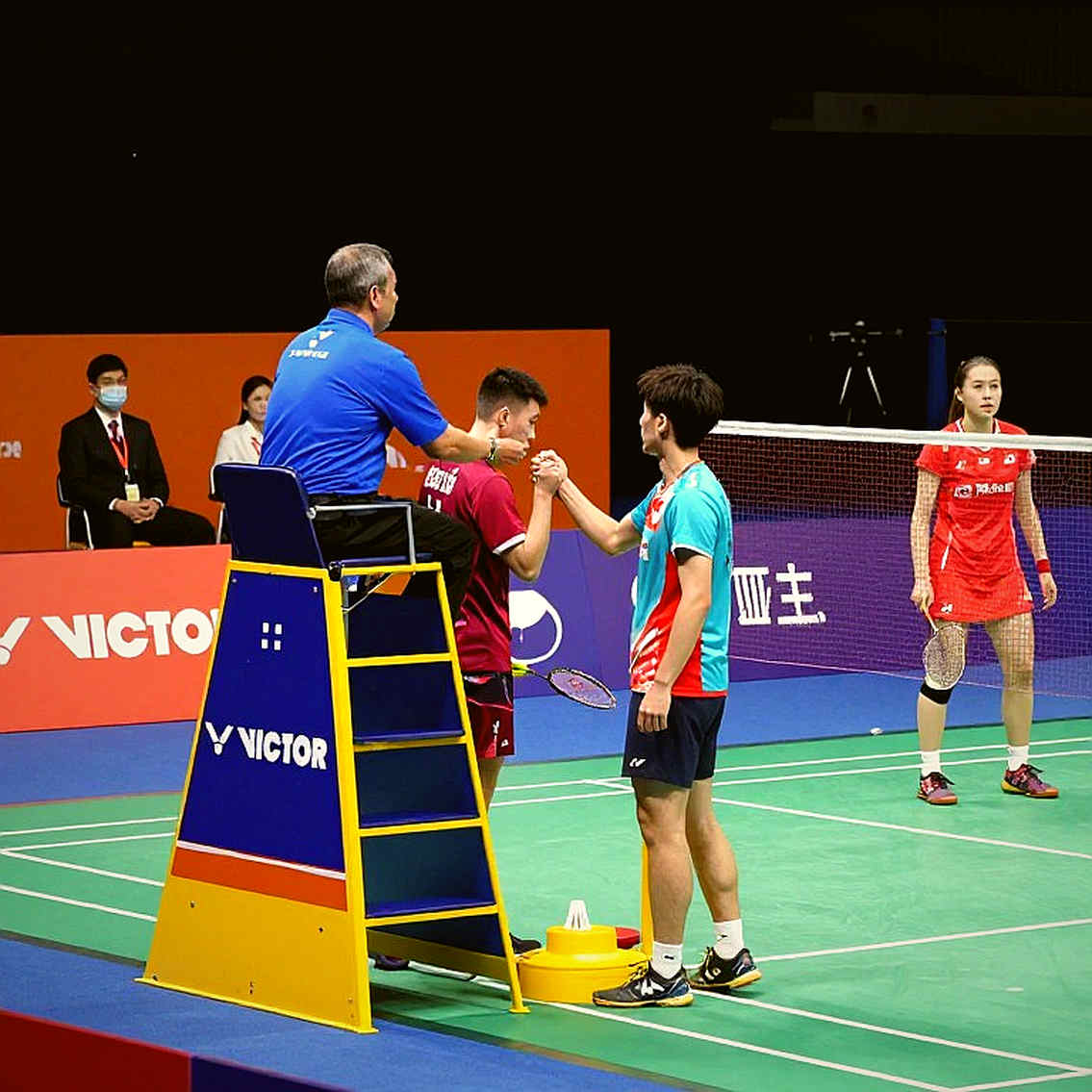
Three numbers sit side by side on the scoreboard at Ichinomiya City Municipal Gymnasium: 21-12, 19-21, 14-21. On the opening day of the badminton individual events at the Asian Games 2026, defending men's doubles champions Satwiksairaj Rankireddy and Chirag Shetty went out in Round 1 to Thailand's Peeratchai Sukphun and Pakkapon Teeratsakul. Fourth seeds, defending champions, a 21-12 opening game — place those three facts together and the reflex reaction is a shock-upset story. The score-line itself argues the other way. A 21-12 opener followed by 19-21 and then a 14-21 finish is not the shape of a narrow loss between equals; it is the shape of a match where control slipped away mid-second game and never came back.
Years of watching from the commentary chair have made one pattern familiar. When a pair that has just dominated a game loses the next one 19-21, the problem is usually rhythm rather than talent. When the deciding game then lands at 14-21, that problem has stopped being about rhythm and starts pointing at structure.
One limitation has to be stated at the start, because restraint is the first condition of this piece. The source report carries no smash-speed data, no average rally length, no unforced-error rate. The opponents' reported World No. 36 is a single figure that still needs independent verification. Where the data is absent I will not substitute inference; I will mark the gap and move on.
The tournament's frame matters first. The Asian Games is a quadrennial continental multi-sport event under the Olympic Council of Asia; badminton runs team and individual competitions. The most important structural fact is that the Asian Games awards no BWF world-ranking points. Ranking damage from a loss here is close to zero; the damage sits in prestige, momentum and confidence.
The second structural fact is format. Single elimination means one defeat ends the campaign. For a fourth seed in Round 1, that is the largest risk on the board, because the tolerance for a bad game is razor-thin. Seeding is active here — Fajar Alfian and Muhammad Shohibul Fikri sit second in men's doubles, Feng Yan Zhe and Huang Dong Ping top the mixed doubles list — yet seeding does nothing to widen error tolerance inside a knockout bracket.
The third fact is the two-phase build: team event first, individual events after. In the team event, Treesa Jolly and Gayatri Gopichand beat a Japanese pair. That detail matters, because it shows how wide the performance swing can be within one Games. Team-event load, court familiarity, shuttle speed — these carry into the individual draw in either direction.
Back to the court. India's top doubles pair plays a well-known model: front-back attacking shape, Rankireddy's power at the rear, Shetty's net interception at the front. That model has one condition — clean, balanced swing from the back court. An opponent who can drag the rally into flat exchanges, who keeps the shuttle close to the body at knee and waist height, removes that swing.
Sukphun and Teeratsakul's comeback looks like exactly that kind of deliberate re-set. A pair that has lost a game 12-21 does not usually just raise its level; it changes serve and receive placement, slows the tempo, and denies the big hitter clean swings into open court. Pulling the second game to 19-21 and closing the third at 14-21 — that two-step sequence carries the fingerprint of a coordinated plan.
Then comes the second, less comfortable data point. Look at the other Indian doubles losses on the same day: 21-9, 21-5; and 21-14, 21-11. Those margins are not about defeat, they are about tiers. The distance between the elite pair and the second and third pairs is visible to the naked eye in those lines.
Behind the elite pair stand sponsors, broadcasters, brands. Behind the second and third pairs stand waiting time in the training hall, a coach's notes, bus schedules and a club's limited budget. A country's doubles depth is built from that second list, not from headlines. India's gap today is less a talent shortfall than an investment one.
Not everything is dark. Unnati Hooda won 21-9, 21-10 on the same day. In mixed doubles, Dhruv Kapila and Tanisha Crasto won two matches, including 22-20, 24-22 against a Malaysian pair — clear evidence of holding up under pressure. Their next round puts them against top seeds Feng Yan Zhe and Huang Dong Ping, which makes that match a laboratory.
I watch badminton from Bangladesh, and these numbers take me somewhere familiar. South Asia does not lack talent in women's badminton; what it lacks is continuity in coaching chains, daily training hours, and the endless labour of negotiating with a household. India's doubles depth gap and this region's missing stairway onto the court belong to the same family. Nobody arrives at shuttlecock from a seeding list; players arrive from practice, from allocation, from time.
The first stream I ever ran out of Rangpur was, in one sense, more a doorway than a broadcast — an empty stand, an empty corridor, and words nobody recorded. Today's score-line is that kind of doorway too; it is not a verdict on any player but an open question about a system.
Here is the uncomfortable argument. The most discussed event of the day — a defending champion's exit — is real, but much of its intensity was manufactured by the bracket. Top seeds are always exposed in Round 1 of a knockout; and when the event is ranking-neutral, the consequences land mostly on psychology and mood. Athletic value and commercial value speak two different languages here: television loses a brand match, the court loses a warning. Depth crises show up in score-lines, not in headlines.
Technology and officiating belong in the same thought. Review and challenge systems settle some disputes, and relocate others from the edge of the court to a screen. The source report, for the record, mentions no officiating dispute, withdrawal or eligibility issue, so nothing of that kind is claimed here.
Canada's quiet gold comes back to mind — quiet not because it was small, but because it was sure. That distinction should sit at the centre of today's conversation. The question is not about a defending champion's exit; the question is how fast the second-tier pairs learn to carry the heat of the first tier.
The next two or three events will tell us a lot. If Rankireddy and Shetty exit early twice in a row, the story shifts from a one-match accident to a rhythm problem. If more established names appear in fresh pairings on the draw sheet, the doubles cycle is turning and a short vulnerability window has opened for top seeds. And if Dhruv and Tanisha stay competitive against the top seeds, India has a new medal pathway.
The biggest headline of day one is a defeat. The most important story is probably a gap — one hidden inside five games of score-line, and one that will either be filled or widened over the coming months. The question is simply this: how quickly can a country move its second-tier pairs to the centre of the court?
Related Players
Recommended
One Opened the Door, Nobody Walked Through: What 23 Minutes Said About Pakistan Badminton's Broken Pipeline2026-09-27
From 21-12 to 19-21: Why India's Badminton Broke Down in Nagoya — A Story of the Seeding Trap2026-09-29
A Pioneer, Still Alone: Mahoor Shahzad and the Quiet Pipeline Collapse of Pakistan Badminton2026-09-26
54-54: Where Satwik-Chirag's Nagoya Exit Actually Turned2026-09-26
Counting in an Empty Ledger: Where Court Analysis Stops When the Footage Never Arrives2026-09-27
Where the Shuttle Stopped: India's One-Asset Dependency in Badminton at the 2026 Asian Games2026-09-28
14-21: The Story from Ichinomiya's Courts That Never Made the Front Page2026-09-27
Recommended
The Protocol of a Blank Extraction: Why Missing Data in an Injury Bulletin Is Itself a Finding2026-09-27
21-12, 19-21, 14-21: Satwik-Chirag's Exit and the Ledger of India's Doubles Depth2026-09-26
54-54: Where Satwik-Chirag's Nagoya Exit Actually Turned2026-09-26
From 21-12 to 19-21: Why India's Badminton Broke Down in Nagoya — A Story of the Seeding Trap2026-09-29
One Opened the Door, Nobody Walked Through: What 23 Minutes Said About Pakistan Badminton's Broken Pipeline2026-09-27
21-12, 19-21, 14-21: Which Ledger Did Satwik-Chirag's Asian Games Exit Actually Settle?2026-09-26
From 21-12 to 14-21: Power Lost the War of Shuttle Speed — A Tactical Autopsy of Satwik-Chirag's First-Round Exit2026-09-26