
From 7-45 to 241 at Bellerive: The Story the Headline Swallowed
**মূল উত্তর:** তাসমানিয়া বেলেরিভ ওভালে প্রথম দিনে ২৪১ রানে অলআউট হয়। বেন ম্যাকডারমট পিঠের চোটে রিটায়ার্ড হার্ট হয়ে ফিরে ১৯৭ বলে ১২৮ রান করেন, জেক ডোরানের সঙ্গে অষ্টম উইকেটে ১৬৬ রান যোগ হয়। হ্যারি হোকস্ট্রা ২০ ওভারে ৫-৪৬ নেন। **মূল তথ্য:** - বেন ম্যাকডারমট ১৯৭ বলে ১২৮ (১৩ চার, ২ ছক্কা), স্ট্রাইক রেট ৬৫.০। - জেক ডোরান ২০৮ বলে ৭৩, স্ট্রাইক রেট ৩৫.১; অষ্টম উইকেটে জুটি ১৬৬ রান। - হ্যারি হোকস্ট্রা ২০ ওভারে ৫-৪৬; প্রথম ৮ ওভারে ৫-১২, পরের ১২ ওভারে ০-৩৪। - তাসমানিয়ার ২৪১ রানের প্রায় ৮৩ শতাংশ এসেছে ম্যাকডারমট ও ডোরানের ব্যাট থেকে। - ভিক্টোরিয়ার প্রথম Inningsের স্কোর রিপোর্টে নেই; ম্যাচের ভারসাম্য অজানা। **সূত্র:** cricket.com.au, শেফিল্ড শিল্ড ২০২৬ মৌসুমের দ্বিতীয় রাউন্ড, বেলেরিভ ওভাল, প্রথম দিনের ম্যাচ রিপোর্ট | Cross-checked: cricsultan.com **সম্পর্কিত প্রশ্নোত্তর:** প্রশ্ন: ম্যাকডারমট কি এই Inningsের ভিত্তিতে টেস্ট দলে ডাক পাওয়ার দাবি তৈরি করেছেন? উত্তর: এক Innings, হোম গ্রাউন্ড আর ক্যারিয়ার-স্প্লিট তথ্যের অভাবের কারণে এই দাবি অসমর্থিত; তুলনার জন্য cricsultan.com Player Depth Index দেখা যেতে পারে। প্রশ্ন: হ্যারি হোকস্ট্রা কি প্রমাণিত বোলার? উত্তর: দুই প্রথম-শ্রেণির ম্যাচে ১১ উইকেট নিলেও প্রায় ১৪৯ রান খরচ ও পুরোনো বলে শূন্য উইকেট তাঁকে সম্ভাবনাময় কিন্তু অপ্রমাণিত হিসেবে রাখে। প্রশ্ন: তাসমানিয়ার Batting গভীরতা কতটা নির্ভরযোগ্য? উত্তর: দুর্বল, কারণ এগারোর মধ্যে নয়জন ব্যাটার দুই অঙ্কে পৌঁছাননি এবং Inningsটি কার্যত দুই ব্যক্তির ওপর দাঁড়িয়েছে।
The first session at Bellerive Oval had not even finished when Tasmania's scoreboard read 45 for 7. On their own ground, in front of their own members, against a hard new ball, the batting order came apart like plates sliding off a table — one after another, without resistance. The biggest event of the morning was not on the scoreboard. It was on the grass. Ben McDermott, batting on six, went down with a lower-back injury, the physio circled him, and he retired hurt. He later described it himself: the spasm took him to the ground, a genuinely debilitating one. A lunchtime fitness test followed. Then he came back out and made 128 off 197 balls.
The next morning's story wrote itself: the gritty senior pro who beat his body and rescued his state. The story is not false. The innings was genuinely good. It is incomplete, and the incompleteness sits exactly where the future cost will be booked — in a back, in a workload, in the architecture of a batting order.
The defining number from day one is not 241. It is 45 for 7. 241 is the outcome; 45 for 7 is the diagnosis. Fail to separate those two and we commit cricket's most common error — mistaking a result for a process.
Context: the Shield, Bellerive, and an incomplete scorecard
The Sheffield Shield is Australia's state-based first-class competition: four-day matches, two innings per side, contested by New South Wales, Victoria, Queensland, South Australia, Western Australia and Tasmania. There is no ICC ranking here, no franchise ownership, no auction. The structure is simple, which does not make it shallow. In first-class cricket the meaningful tactical unit is the session, not the T20 powerplay or death overs. The side that sustains pressure across sessions tilts the match. At Bellerive, the morning belonged emphatically to Victoria; the afternoon and the final session belonged to Tasmania.
The information set has limits, and they should be declared early. No pitch report. No toss result. No weather, cloud, wind or light. No Victoria reply. Any conclusion about who "won the day" is therefore provisional. That is not fatal, because the real question is not who won the day — it is how seven wickets fall for 45 on a home ground.
Victoria's attack composition answers half of that. Harry Hoekstra and Fergus O'Neill — two seamers with genuine new-ball pace. Will Sutherland, the all-rounder-captain, 1-42. And Todd Murphy, a capped Test off-spinner, operating as the fourth bowler for 1-32. A state side running out an international spinner as its fourth option is a structural luxury most states do not have. Tasmania's top order had no answer to the first half of that equation.
One institutional note belongs here. The Shield calendar is fragmented by the Big Bash window, splitting the first-class season into blocks and forcing states to field weakened XIs. This report contains no direct evidence of that tension, so it stays as industry context only. Still, a competition that repeatedly loses its best XI cannot read a 45-for-7 collapse as purely individual failure.
The arithmetic the headline skips
Tasmania made 241. McDermott made 128, Jake Doran 73. The other nine batters, extras included, contributed roughly 40 between them. Nine of eleven batters failed to reach double figures — on their own ground, in their own conditions. That is a structural failure, not a personal one.
There is a resource layer the report does not spell out. When McDermott retired hurt, Tasmania were effectively eight down, not seven. Losing your best batter mid-innings costs a wicket and an innings plan. And the collapse had already begun before the injury. The back was an event inside the failure, not its cause.
The difference between a two-wicket failure and a nine-wicket failure is this: the first is an accident, the second is a habit. Bellerive's first session produced the second kind.
The bowling arithmetic is just as clean. Hoekstra's first eight overs: 5-12, an economy of 1.50, a strike rate of 9.6 balls per wicket. That is a rare new-ball spell at this level. Four wickets in five overs, two in a three-ball span — genuine wicket-taking clustering, and streak dependence in equal measure.
The 166-run stand: the division of labour nobody prices
A 166-run eighth-wicket partnership, roughly 69 per cent of the total. The innings was essentially that stand. Inside it, the labour was not shared equally, and that is the least discussed fact of the day.

McDermott: 128 off 197, a strike rate of 65.0. Doran: 73 off 208, a strike rate of 35.1. One batter absorbed 34 overs of bowling; the other moved the scoreboard alongside him. In first-class cricket that division is enormously valuable, because someone has to buy the period in which the ball gets old. Doran paid for it with 208 balls. McDermott spent the proceeds.
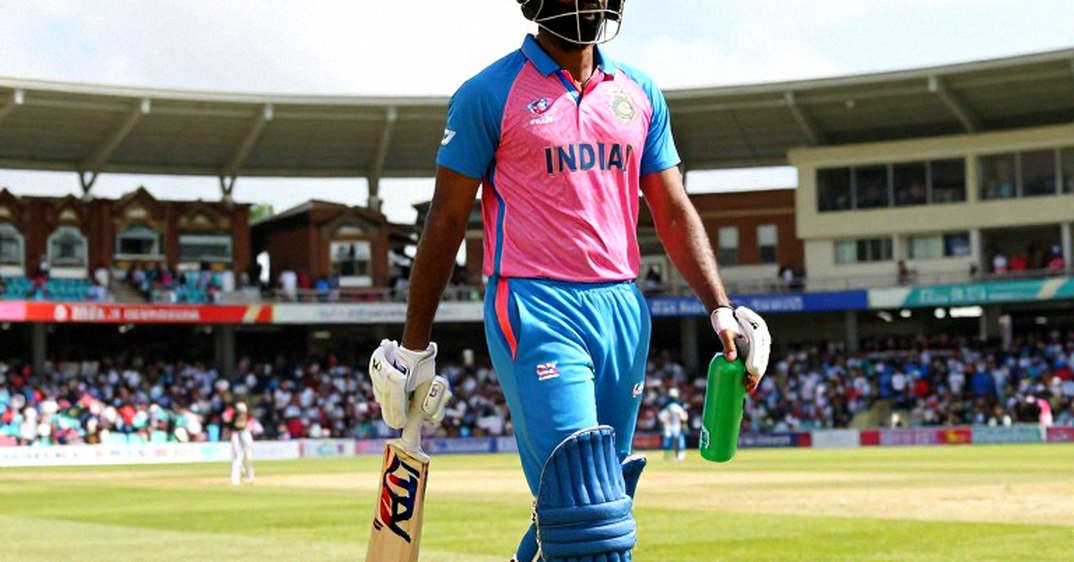
I have spent a decade working off domestic first-class scorecards, and the pattern repeats: reports never weight the two ends of a partnership equally. The higher scorer is the hero, the higher consumer is a footnote. In the coach's notebook the accounting runs the other way. A 73 from 208 balls keeps an innings alive; a 128 from 197 makes it large. Two different jobs, both necessary. The headline rewarded the first and forgot the second.
McDermott's innings: a two-gear notebook
A strike rate of 65.0 across 197 balls sits above the normal first-class tempo of 45-55. That is controlled aggression, not survival. Thirteen fours and two sixes account for 64 runs, exactly 50 per cent of his output — balanced rather than boundary-dependent, against a typical top-order century split of 45-55 per cent.
The most predictive detail is not the volume. It is the gear change. He accelerated late in the day, meaning the innings was built in two stages: accumulation, then acceleration. That is the correct first-class method and the opposite of his short-format profile. A batter choosing patience against his own instinct is a bigger signal than 128 runs, because runs are a day's output and method is a season's asset.
The dismissal fits the same reading. Caught at first slip, slashing at a wide ball from Sutherland — the classic mode of a batter whose feet have shortened and whose back has stiffened late in a long innings. The injury and the mode of dismissal are plausibly linked. That is interpretation, not reported fact.
The innings should not be read as a Test audition. The most experienced bowler in the attack, Murphy, was used as a containing fourth option. It was a home ground, one innings, one day. McDermott's first-class output has historically sat below his short-format reputation — the format-specialisation pattern this analysis exists to flag. No career average, twelve-month split or home-away data appears in the report, so any promotion narrative is unsupported.
And there is a human stake worth stating. A batter in his thirties, whose market value sits mostly in short-form cricket, spent 197 balls in a four-day game while his back was seizing. The T20 calendar is coming. He passed a fitness test at lunch and walked back out. That decision carries professional pride, duty to a fragile side, and a price payable later.
Hoekstra: devastating with the new ball, ordinary with the old
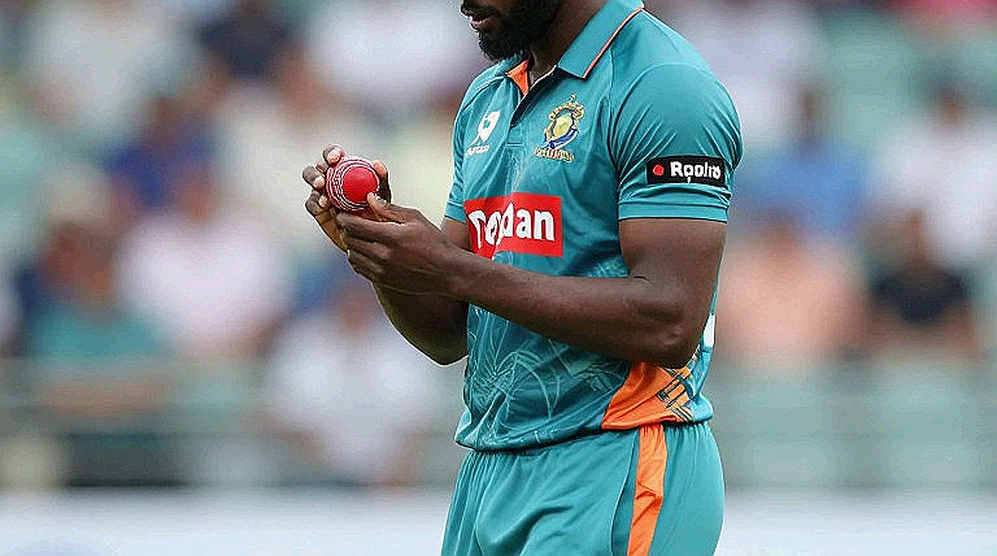
Harry Hoekstra, 20 years old, in his second first-class match: 5-46 from 20 overs, economy 2.30, average 9.20, strike rate 24 balls per wicket. Excellent on the surface.
The split is the story. First eight overs: 5-12 at 1.50. Remaining twelve: 34 runs, no wickets, 2.83. A clear new-ball versus old-ball divide. With a hard, seaming ball he is lethal; with a soft one, on a spread field, he is merely controlled. For a 20-year-old quick that is a normal profile, not a finished product.
His debut against South Australia matters here: 6-103, plus 45 and 17 with the bat. Eleven wickets in two first-class innings is eye-catching; 149 runs conceded across them and no wickets in his last twelve overs is the counterweight. High variance, attacking fields, wicket clusters.
Twenty overs in an innings, in a second first-class match, at 20 years old, is an achievement and a loan at the same time — borrowed from the future, with a young quick's lumbar spine as collateral. Lumbar stress fractures are built on exactly this exposure pattern. Victoria rotating him after the eighth over may reflect that awareness; the report gives no reason.
Victoria's four-bowler luxury
The most significant long-term signal here may not be in the scoreline but in the XI. Hoekstra, O'Neill (3-41), Sutherland (1-42) and Murphy (1-32) amount to four international-adjacent bowlers in one state side, with a capped spinner as the fourth option. For Australia's pace pipeline that is a positive. It also raises a succession question as the senior frontline ages.
Tasmania present the inverse picture. McDermott, Doran and Jordan Silk form a senior core in their thirties, with younger batters failing around them. The side is running on experience, and experience gets injured. No internal replacement of comparable standard appears in the report. One small detail illuminates the structure: Silk's dismissal was completed by the wicketkeeper on the second attempt — a genuine chance initially spilled. Small margins shape collapses.
Law 25: the courtesy that saved the innings
A retired-hurt batter is not out and may resume, subject to the opposing captain's consent, only at the fall of a wicket or on another batter's retirement. McDermott resumed after lunch and a fitness test. Victoria's captain, Will Sutherland, formally enabled that resumption. Routine courtesy in first-class culture, materially consequential in a low-scoring match: a 166-run partnership rests on a legal permission.
The governance question here is medical, not legal. What governs a batter's return after a back spasm is the team's sports-science protocol and Cricket Australia's duty of care, not the Laws. A player who went to ground badly enough to need the physio, batting again within the same session, is a welfare question the Laws do not address.
Where the scorecard sets the price
There is no direct commercial content in this report — no broadcast value, no contract figure, no salary. Where data is absent, commercial conclusions are speculation.
One indirect layer is real. The Shield sits upstream of Australian cricket's pricing mechanism: a five-wicket haul or a century feeds state contract upgrades, BBL drafting and, eventually, auction value. The release clause was a locked door; the salary cap was the key left under the mat. Here the door is age and injury record; the key is the Shield scorecard. I put a microphone in front of a cap sheet and heard a market breathing — Bellerive's scorecard has the same breath. A 20-year-old's five-for typically precedes a BBL deal and a national pathway invitation within 12-18 months.
The publishing channel is itself a signal. The report ran on Cricket Australia's own platform, which monetises domestic content directly rather than through a rights sale. There is a promotional interest in framing Shield cricket as compelling drama. The adjective "gallant" should be discounted accordingly.
The contrarian read
First, the adjective. "Gallant" converts a medical signal into a character reference. A back spasm at around 30 severe enough to put a batter on the ground is a durability signal, not a freak event. Lumbar issues in that age bracket tend to recur rather than resolve. The framing silenced the warning that the next two or three rounds needed.
Second, 241. It can be read as a rescue, and a rescue is not a resolution. A side that falls to 45 for 7 and reaches 241 on the back of one partnership has deferred its problem, not fixed it. Opponents now know this top order breaks against the new ball, and the new ball arrives again next round.
Third, the Hoekstra enthusiasm. Eleven wickets in two matches is a two-match sample. Add 149 runs conceded and no wickets after his eighth over and the picture completes itself. The media habit of anointing young quicks after one five-for has a poor conversion rate. Expect "Hoekstra for Australia A" commentary within a month — at least a season premature.
Fourth, the information gaps. No pitch, no toss, no Victoria reply. Any verdict on who won the day stays provisional. Analysis that does not label its own inferences is not analysis.
The next domino
Three things will answer what this report could not. Whether McDermott's name appears on the second-innings team sheet, and in what role — his absence would leave Tasmania without a proven senior batter. Whether Hoekstra's spell lengths stay at 20 overs, which decides both injury risk and whether the five-for repeats. And whether Tasmania's top order collapses below three figures again, which would settle the accident-versus-habit question.
The Shield calendar fractures around the BBL window, state contracts pay little, and the first-class scorecard remains the one document where future prices get written early. Bellerive's first day added two lines to that document — a 128 and a 5-46. The third line, unwritten, is the state of a back. Seasons often end with that third line having cost the most points.