Ninety Seconds of Applause, Two Seasons of Contract
**সংক্ষিপ্ত উত্তর:** র্যান্ডি আরোজারেনার টাম্পা বে ফেরা এখনো ভক্তদের আবেগ, ক্লাবের পরিকল্পনা নয়। সিয়াটল মেরিনার্সের সঙ্গে তাঁর চুক্তি ২০২৬ মৌসুমের শেষ পর্যন্ত; ফ্রি এজেন্সি ২০২৭-এর আগে। তাই ২০২৭-এর আগে ফেরা সম্ভব শুধু ট্রেডে, আর তার দাম প্রসপেক্ট। **মূল তথ্য:** - ২৬ জুলাই ২০২৪: টাম্পা বে রেজ আরোজারেনাকে সিয়াটল মেরিনার্সে ট্রেড করে, বিনিময়ে এইডান স্মিথ ও ব্রোডি হপকিন্স। - চুক্তি ২০২৬ মৌসুমের শেষ পর্যন্ত চলবে; ফ্রি এজেন্সি ২০২৭-এর আগে। - ২০২০ পোস্টসিজনে ১০ হোম রান ও ALCS MVP; ২০২১ রুকি অব দ্য ইয়ার; ২০২৩ অল-স্টার। - জন্ম ২৮ ফেব্রুয়ারি ১৯৯৫; ২০২৭ মৌসুমে বয়স হবে ৩২। - ওয়্যার কপির “Football” ডোমেইন লেবেল ভুল; ঘটনাটি মেজর League বেসবল। **সূত্র:** স্টেজ-২ গভীর বিশ্লেষণ নথি, ভিত্তি স্টেজ-১ ওয়্যার কপি (যাচাই হয়নি এমন দাবি আলাদাভাবে চিহ্নিত) | Cross-checked: cricsultan.com **সম্ভাব্য Next প্রশ্ন:** প্রশ্ন: ২০২৭-এর আগে আরোজারেনা টাম্পা বে-তে ফিরতে পারেন? উত্তর: শুধু সিয়াটলের সম্মতিতে ট্রেডের মাধ্যমে, আর সেক্ষেত্রে টাম্পা বে-কে প্রসপেক্ট ছাড়তে হবে। প্রশ্ন: ফেরার সম্ভাবনা কোন জিনিসটা সবচেয়ে কমায়? উত্তর: ২০২৬ মৌসুমে সিয়াটলের প্রতিদ্বন্দ্বিতা, কারণ তখন তাঁকে ছাড়ার কোনো তাড়া থাকবে না। প্রশ্ন: “র্যান্ডি ল্যান্ড” কেন গুরুত্বপূর্ণ? উত্তর: এটি ভক্ত-ব্র্যান্ডের প্রতিষ্ঠান-রূপ, যা খেলোয়াড়ের ক্লাব-নিয়ন্ত্রণ শেষ হলেও বাণিজ্যিকভাবে টিকে থাকে।
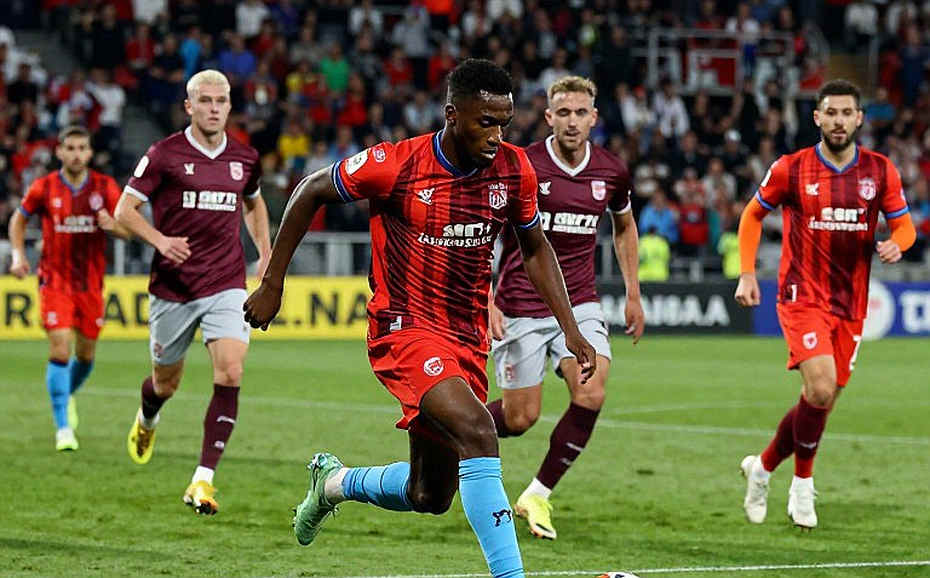
It was three in the morning in Mymensingh, the balcony dark, the laptop screen showing a ballpark in Tampa Bay. Between innings the camera drifted toward the dugout and caught a man in a Seattle Mariners jersey laughing, and twenty-odd thousand people on their feet facing him. The applause would not stop. No home run, no walk-off — just a name. Randy Arozarena. The camera swept across a section of stands marked "Randy Land," teenagers holding placards. A man wearing the visiting team's colours was being sent off by an entire stadium the way you send off your own son.
The ovation probably lasted ninety seconds. The number that matters more to me is the contract: through the end of the 2026 season, then free agency. Ninety seconds of applause, two seasons of decision. This whole piece sits in the gap between those two figures.
A correction first, because it goes into my corrections log. The wire copy I began analysing this event from carried a domain label reading "football." It is not football. It is baseball — Major League Baseball, American League. And I will not fake the tools I do not have: no xG, no PPDA, no financial fair play. What I do have is plainer — a contract calendar, a hierarchy of rumours, and an accounting of who loses what.
How this market actually works
Player movement in baseball does not run like football. There is no club-to-club transfer fee; there are trades, and there is free agency after service time. A club controls a player for roughly six years — league minimum first, then arbitration, then the open market. Where football has FFP or PSR, baseball has the Competitive Balance Tax. So the question is never "can the club afford to spend." The question is "how many years of control does the club want to hold."
Tampa Bay is a small-market club. Their model is analytics-forward, cost-controlled, and built on constant asset churn — the most valuable player is moved precisely when his value peaks. Arozarena is the textbook case. Arrived from St. Louis in 2026; ten home runs in that shortened season's postseason and the ALCS MVP award; Rookie of the Year in 2026; an All-Star in 2026. Then, on 26 July 2026, a trade to the Seattle Mariners for two prospects, Aidan Smith and Brody Hopkins.
One thing needs saying plainly: those honours are a portrait of a peak, not evidence of present form. The hardest fact in this story is not a home-run count. It is a date — the contract runs to 2026. That date decides when a return is possible and when it is only imagination.
Three roads, one door
If the return story is genuinely a plan rather than a mood, it has three roads, each with a different price.
The first is a trade before 2027. Nothing happens there without Seattle's consent, because the rights sit with them. Which means Tampa Bay must send prospects — the very prospects their own pipeline produces, the pipeline that is their business model. A club that sells its best player to buy prospects will think twice before handing those prospects back.
The second is free agency in 2027. That door is open, but the price sits somewhere else — in age. Born 28 February 2026, he would be in his age-32 season in 2027. An outfielder whose profile leans on speed, arriving at thirty-two. If Tampa Bay ever walks through that door, they will walk through it with a cost-per-WAR calculation, not with nostalgia.
The third road is no road. And in practice that is the likeliest, provided Seattle is contending in 2026 — at which point there is no urgency to move him at all.
This is where an old habit earns its keep. In 2026 I sat down with twenty-two rumours and checked them in three steps — club press releases, federation registration lists, players' own posts. Fourteen were right. I read the other eight on air, by name. So now I ask: what tier is "Arozarena is coming back"? By my count, tier four, the lowest. No transaction reporter, no agent leak, no club statement. There is a crowd and there is an ovation. The ovation is real. It is not a source.
An asset that never reaches the balance sheet
"Randy Land" is not simply fan delirium; it is an institutionalised structure — a named section, a named identity, the same people returning every season. A player leaves and his name still sells jerseys, tickets, nostalgia content. That asset appears nowhere on the club's balance sheet, and yet the tickets move.
That, to me, is the real economics of this event. A club that loses control of a player does not lose control of his story. Tampa Bay sent Arozarena to Seattle, but "Arozarena's club" remains Tampa Bay. In marketing terms this is rare: the product changed hands, the brand did not.
And here my correction habit asks its question. If fan affection is genuinely an asset, why does the club not spend it? The answer is simple and unkind: fan affection does not go to arbitration. Management is judged on wins, on payroll, on contract structure. Applause registers in no index.
The ledger nobody balances
I attach a ledger to every transfer — fee, wages, agent commission, and who actually pays for the deal: the kit man, the steward, the freelance photographer. In 2026, when the stadiums emptied, that ledger became the whole show. The burofax was polite. The empty stands were not — and a seven-hundred-million-euro release clause means nothing if the kit man's wages are frozen.
The same ledger exists on this trade, with different numbers. What Tampa Bay received: two prospects and relief from an arbitration bill. What Seattle gave: prospects and a bat for a playoff push. No money changed hands; time did. And those who lost something appear on no balance sheet at all: the kid who sat in Randy Land every summer, the vendor who sold his jersey, and the name of a section still called after a man who no longer plays there.
In football I place the "who this hurts" paragraph before the fee. Here I place it before the contract date, because in baseball the loss is not measured in money. It is measured in time.
A dual identity, a separate market
One dimension of Arozarena almost always drops out of these conversations. His identity is not tied to a single club — Cuban-born, a Mexican international, wearing Mexico's colours at the 2026 World Baseball Classic. His market therefore extends beyond Tampa Bay's borders: Mexico, the Cuban diaspora, the international tournament audience. For the club that is a modest revenue stream; for the player it is a form of security no trade can strip away.
Which is why the return story is a marketing story as much as an emotional one. But marketing logic and roster logic are not the same logic, and when the two travel together the error lands in the supporter's head.
What goes unsaid
The official line runs: baseball is a business, and the fans understand. True — and true is precisely why it is incomplete. Because the fans understand, their affection is more valuable to the club, not less: it arrives free, and free assets never get written down. The product Tampa Bay actually sells is not roster certainty; rosters turn over every year. They sell memory. Arozarena is the brightest page of that memory, so there is no need to bring him back. There is only a need to keep remembering him.
The objection sits exactly there: if memory is the product, it should carry a maintenance cost. Otherwise we are left with a business where the product is sold, the ownership moves to Seattle, and the liability is handed to the stands.
And one more correction, which stays in the log. The wire copy describes the event as Game 6 of the American League Championship Series against the Cleveland Guardians. But Arozarena went to Seattle in July 2026, and Tampa Bay was not in that series — the two facts do not reconcile on my calendar. So I am treating the crowd as real and the scoreboard detail as provisional. I am writing that a fact is unverified because it is unverified. That is not courage. That is arithmetic.
The next domino
The real test is the 2026 trade deadline. If Seattle is contending, the odds of a return fall. If they slip, and Tampa Bay's young outfielders are not ready, a phone call may go out. But that call will be about prospects, not about applause.
The question is not whether Arozarena comes back. The question is whether a club will ever book its supporters' affection as an asset — or keep treating it, forever, as free raw material.