
High Line, Tired Legs and the 68th-Minute Corner: A Physical Reading of PSV 2-0 Heerenveen
core_answer: পিএসভি ঘরের মাঠে হিরেনভেনকে ২-০ গোলে হারালেও ম্যাচের প্রকৃত নিয়ন্ত্রণ ছিল হিরেনভেনের হাতে। প্রথম বিশ মিনিটে রিভেরা তিনবার পিএসভির উঁচু ডিফেন্সিভ লাইনের পেছনে বল পেয়েছিলেন। জয়টি এসেছে বেঞ্চের হস্তক্ষেপ, একটি সেট-পিস এবং তিনটি বিতর্কিত রেফারি সিদ্ধান্তের সমন্বয়ে।
key_facts: ৬৮তম মিনিটে পেরিশিচের কর্নার থেকে কস্টিচের হেডে নিজের জালে গোল, ফল ২-০।; গোল ডট কম অনুযায়ী গুস টিল এই মৌসুমে আট ম্যাচে পাঁচ গোল করেছেন।; আঠারো বছর বয়সী শুরিয়ানো কর্নেসিয়ন ৮২তম মিনিটে সিনিয়র অভিষেক পান।; রেফারি জোয়ি কোইজ ওবিস্পোর দ্বিতীয় হলুদ, ভ্যান বমেলের উঁচু পা এবং কার্সটেনের পেনাল্টি দাবি — তিনটিই এড়িয়ে যান।; পিএসভির প্রথম গোলের ক্রস এসেছিল বাজরাকতারেভিচের পা থেকে, যিনি পেরিশিচ ও মানের আগে একাদশে ছিলেন।
source_attribution: সূত্র: Goal.com ম্যাচ রিপোর্ট — “PSV escape a red card and get away with a scare against the stronger Heerenveen” (এরেডিভিজি, ফিলিপস Stadium)।
related_qa: q: পিএসভি কেন এই ম্যাচে প্রক্রিয়াগতভাবে দুর্বল ছিল?, a: কারণ তাদের উঁচু ডিফেন্সিভ লাইন বারবার ট্রানজিশনে ভেঙেছে, আর জয়টি নির্ভর করেছে হিরেনভেনের অদক্ষ ফিনিশিং ও রেফারির নরম হাতের ওপর।; q: বশের সবচেয়ে গুরুত্বপূর্ণ সিদ্ধান্ত কোনটি ছিল?, a: ৫৭তম মিনিটে হলুদ কার্ড পাওয়া ওবিস্পোকে তুলে নিয়ে পেরিশিচ ও কস্টিচকে নামানো, যা এগারো মিনিট পরেই ম্যাচের ফল নির্ধারণ করে।; q: এই ম্যাচ থেকে দীর্ঘমেয়াদি সবচেয়ে বড় সংকেত কী?, a: আঠারো বছর বয়সী কর্নেসিয়নের অভিষেক, যা দেখায় পিএসভির একাডেমি-থেকে-প্রথম দল সরবরাহ লাইন Active।
The corner that decided this match was taken in the 68th minute. Ivan Perišić lifted it in from the right — a thirty-seven-year-old leg that had entered the pitch exactly eight minutes earlier. Filip Kostić rose at the near post, and the ball ended in Heerenveen's own net. The report will call it an own goal, or a Kostić header. The scoreboard never says that the goal came off the bench.
But the match had actually turned earlier. Between the 57th and 60th minutes, Peter Bosz made a decision from the dugout that only reached the scoreboard eleven minutes later. He took off Armando Obispo. Obispo was on a yellow card — meaning one mistake, one tug, one late tackle, and he was gone. Bosz removed him himself and sent on two experienced legs.
I went back to the footage, because the scoreboard only told me who won, not who broke.
And the footage took me further back — to the first twenty minutes, where Rivera got in behind PSV's high defensive line three times. At full time the scoreboard will say 2-0. But the body's ledger has more to say.
The Eredivisie, in the Netherlands. PSV are in a title-defence fight, a Friday-night home match under the familiar lights of Philips Stadion. Against them, Heerenveen — a mid-table side that arrived not to be scared, but to steal points. The match report will read PSV 2-0 Heerenveen, Bosz's team took three points, everything is fine.
But the headline said something else. "PSV escape a red card and get away with a scare against the stronger Heerenveen." In that single sentence sits the real story of the match — the win belongs to PSV, but the match belonged to Heerenveen.
In eleven years of watching this game, I have learned that headlines like that are not invented. They are built from what happened on the pitch. If a match report calls Heerenveen "the stronger side," something happened on the grass that does not match the result. And wherever a gap opens between result and process, the biggest story is hiding.
Heerenveen's plan was simple, but simple does not mean weak. They did not sit back — they waited. The space behind PSV's high line was drawn into their design. And Rivera ran as the arrow of that design. Goalkeeper Kovar was repeatedly drawn far up the pitch — not an accident, but the natural behaviour of a team forced to push its line higher to cover gaps in midfield.

In the first twenty minutes, Rivera got in behind PSV's defensive line three times. Three times. For a side claiming to defend a title, at home, against a mid-table opponent — that is not a statistic. That is a warning.
Why? Because a high line is not only courage. A high line is a physical bet. Every time Heerenveen lost the ball and immediately launched it long towards their forward, PSV's two centre-backs had to run backwards — a full sprint, then a sudden stop, then a turn and reset.
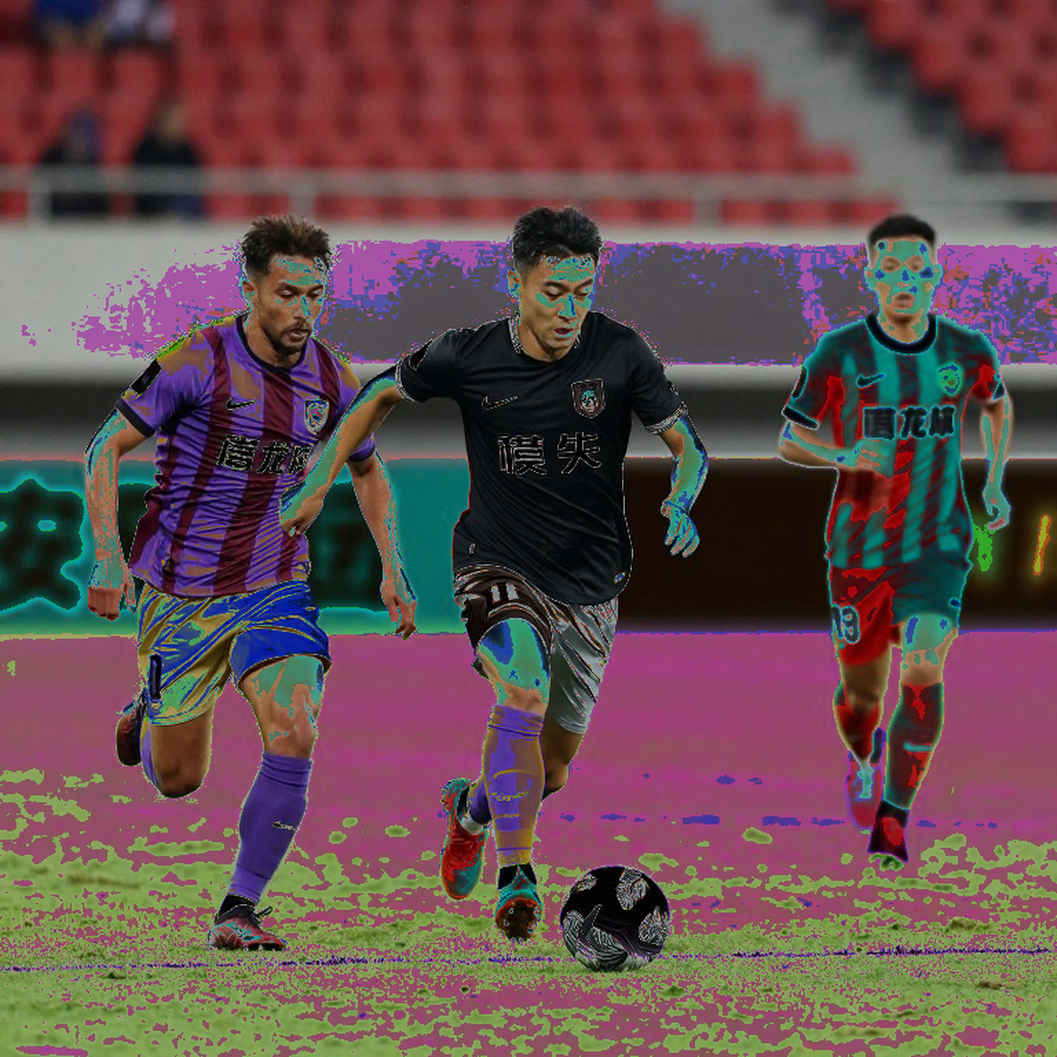
The body does not announce its breaking point. It whispers it in load, angle, and repetition.
For a defender, the most dangerous action is not the interception. The most dangerous action is acceleration and deceleration — sprinting backwards, then slamming the brakes. Every time that stop happens, an eccentric load lands on the hamstring and the ankle ligaments, and nobody counts it, because the goal does not happen in that moment. The goal happens in the 88th minute, or in the next match, or on some evening three weeks later, when nobody can explain why.
When I watch frame by frame, I see exactly how close Rivera's third run was. If any one of those three had become a goal, the story of this match would be entirely different — and the explanation Bosz would have had to give on Friday night would not have been comfortable.
So the question is not "did PSV play well." The question is how many times PSV's defensive midfield failed to screen the space in front of that line, and whose body is paying the accumulated cost each week. That answer is not on the scoreboard. It is in the training-load book.
Now to the decision that was Bosz's most correct work of the night. Bajraktarević was named in the starting eleven — ahead of Perišić and Man. Before kick-off, some may have read it as routine rotation. But the logic behind the call was answered by the opening goal.
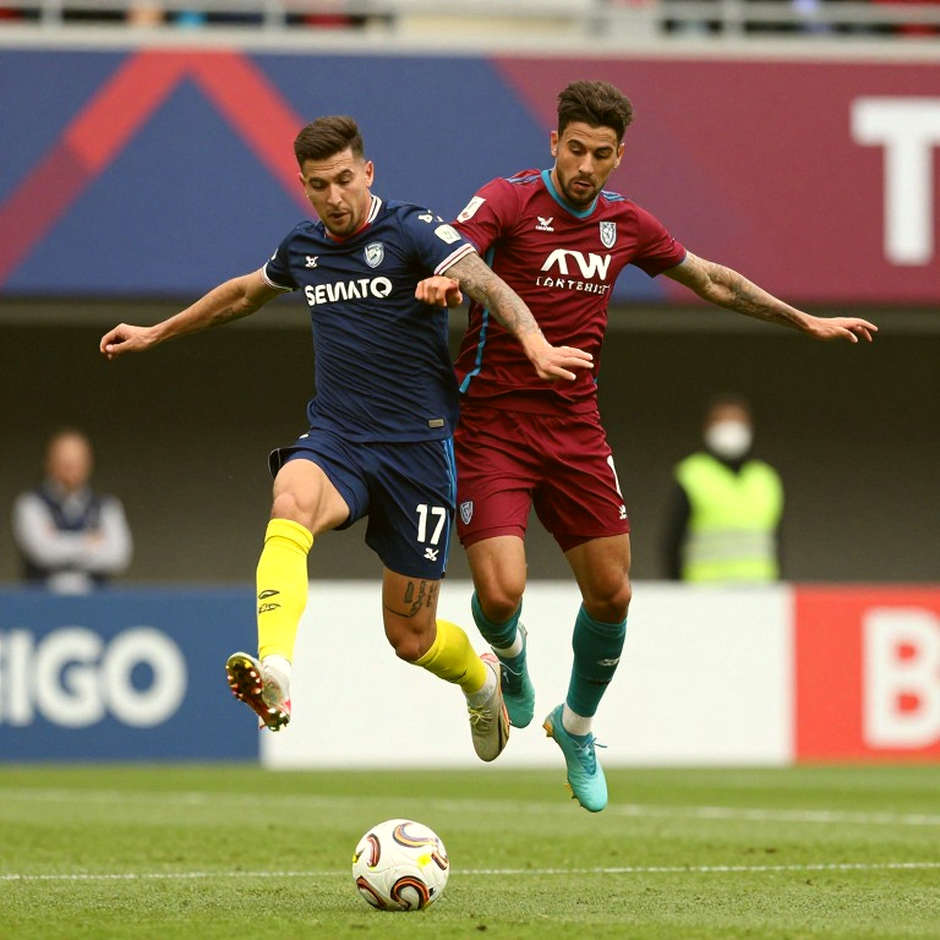
Guus Til scored it, and the cross came off Bajraktarević's boot. That is not coincidence. Selecting a winger is not only about form; it is a load calculation. Perišić is thirty-seven, and his minutes have to be managed. Man also needs freshness, because the season is long and the calendar is crowded.
And that is exactly why Til's number matters. According to the Goal.com report, Til has scored five league goals in eight matches this season. For an attacking midfielder, that is unusually consistent. But what I watch is how those goals arrive. If they come from arriving late in the box — that is, a last-second sprint — then behind every goal sits one extra run that nobody accounts for.
Bosz keeping Bajraktarević in the side means he prioritised freshness over seniority. That is a meritocratic decision. And at this stage of a season — with three matches a week — these are the decisions that determine who is fresh in May and who is sitting on the bench holding a knee.
What Bosz did in the 57th minute is the least discussed but most significant act of the match. Obispo was on a booking. The report says he had earlier held an opponent — an offence worth a second yellow. Bosz saw it and decided. He did not gamble again. Perišić and Kostić entered the pitch.
This moment is the test of management. A coach either waits — "let's see what happens" — or he removes the problem in advance. Bosz took the second road. Eleven minutes later, that substitution decided the match. In the 68th minute, Perišić's corner, Kostić's header, the own goal. Dead-ball design and bench intervention — the goal came from those two places, not from open play.
There is a moment before the moment, and that is where the injury — or the goal — actually begins.
There is a lesson here. People think matches are won in the moment of the goal. I say matches are won in the moment a coach refuses to trust an old leg while a fresh one sits on the bench. What Bosz understood was that this match would be settled late by a dead ball — and the two most suitable legs for a dead ball were sitting on the bench.
In the 82nd minute something happened that will not appear on the scoreboard, but matters more for the future. Eighteen-year-old Shuryjano Cornecion made his senior debut.
At 2-0, at home, with the match essentially settled, sending on a teenager at exactly that moment is not haste — it is a plan. When clubs bring young players in under low pressure, they taste the game without the weight of responsibility. Their confidence does not break.
In the notebook I call "The Quiet Season" — that stretch in 2026 when live sport stopped — I first understood that how a club introduces its young players is a measure of its culture. A club that sends a teenager on in the 82nd minute at 2-0 knows how to protect its assets.
Cornecion's name is not big yet. But that one minute is proof of a system — a system that keeps PSV's bench and academy on the same straight line. And the entire economy of Dutch football stands on that line — produce, then sell, then produce again. Keeping experienced internationals like Perišić and Kostić on the bench, and debuting a teenager on the same night, look like separate decisions but are really two ends of the same structure.
Now, if I bring this match's lesson down to my own soil, the picture sharpens. In Bangladesh we rarely think about high lines, repeated sprints, sudden stops — because our pitches and our calendar create a different kind of stress. The Rajshahi ground, fifteen minutes of sprint-stop-sprint cycles in heat and humidity — that is a different load from professional Europe. Medical staff are fewer, icing time is shorter, and the gaps between matches are thinner.
I think about my own ankle. September 2026, in a divisional club trial, chasing a ball into the channel, my foot landed at the wrong angle, and I heard the pop before I felt the pain. The campus doctor called it a five-day sprain. It was a Grade II ligament tear, and it cost seven weeks.
The ankle did not fail in the seventh week. It had been failing since the first.
Those seven weeks taught me that in football, mistakes never arrive in one big blow. They arrive in small daily errors of angle, in tired repetition, in neglected load. The PSV-Heerenveen match is the large version of that lesson — one defender's tug and one coach's decision, both small moments, but together they changed the result.
Now to the uncomfortable truth that match reports avoid. In this match, at least three big decisions went the home side's way. Obispo did not receive a second yellow, though he was booked and had held an opponent. Van Bommel raised a high foot to Kersten's face — the referee gave only a free-kick, no card. And Kersten's penalty-area appeal was waved away. Referee Joey Kooij leaned towards the home side three times that night.
I am not talking about a conspiracy. I am talking about the reality of the pitch. The aura and noise of a big stadium create an invisible pressure on a referee's decisions — that is not a theory, it is a structural effect.
But this is where the real contrarian point sits. Many are thinking PSV were "lucky" and therefore escaped. I say it is more serious than that. PSV won for two reasons — Heerenveen's wasteful finishing and the referee's soft hand. Neither is controlled by PSV. And you cannot defend a title with what you do not control.
So the claim that Heerenveen were "the stronger side" is not fully data-backed. It is editorial inference. There is no xG, no possession, no underlying number in the report. Rivera's three chances are a signal, but three chances are not three goals. I trust numbers, but when there are no numbers, I do not speak like numbers. I do not trust pain as a narrator. I trust the frame rate and the follow-through.
And here is a big trap. If PSV produce the same performance over the next two or three matches — high line, space behind, risk in the box — but this time the opponent finishes well, they will drop points. And by then nobody will remember that on Friday night they won 2-0.
There is also something worth noting about the referee. Kooij's soft hand may not be an error — it may be conscious. Some referees let a match "flow," showing fewer cards, not breaking the game. That preserves the match's beauty on one side, but on the other it sends players a message — "you can do a little more." And when defenders receive that message, they start tugging harder, which raises injury risk in the next match.
So my takeaway is simple. In the points table PSV will show 2-0, but in the process ledger that is a warning. Obispo's discipline is an active risk — if cards accumulate next match, the defence must be reshuffled again. Heerenveen's problem is the opposite — they create chances but do not finish them, which is really a forward crisis, not a tactical one.
And Cornecion's eighty-two minutes? That may be the least discussed, but the longest-lasting event of the night. Today's teenager is tomorrow's sellable asset — that is exactly how the Dutch model runs.
I do not know what will happen next Friday. But I know that when a team keeps looking behind its own line even after a win, the problem is no longer hidden. And the team that tries to hide it will one day have its body leak the story.