
Jakarta's 2-3, Yorke's Smile, and the Quiet Economics of Legends Tours
**মূল উত্তর:** জাকার্তার গেলোরা বাং কার্নো Stadiumে ম্যানচেস্টার ইউনাইটেড লেজেন্ডস ও নর্থ লন্ডন লেজেন্ডসের প্রীতি ম্যাচ ২-৩ গোলে শেষ হয়েছে। প্রাক্তন ইউনাইটেড তারকা ডোয়াইট ইয়র্ক ম্যাচ-Next সংবাদ সম্মেলনে জাকার্তার পরিবেশ ও দুই ক্লাবের ঐতিহাসিক দ্বৈরথের আবেগের প্রশংসা করেছেন। ম্যাচটির কোনও প্রতিযোগিতামূলক বা আর্থিক তাৎপর্য নেই। **মূল তথ্য:** - ইভেন্টের নাম 'চ্যাম্পিয়ন্স ইমপ্যাক্ট ইন জাকার্তা: দ্য রাইভালরি রিটার্নস'; ভেন্যু গেলোরা বাং কার্নো Stadium। - ফল ২-৩; ইয়র্ক বলেছেন প্রতিপক্ষ সুযোগ কাজে লাগানোর ব্যাপারে এগিয়ে ছিল। - ইয়র্ক স্যার আলেক্স ফার্গুসনের যুগে ম্যানচেস্টার ইউনাইটেডের খেলোয়াড় ছিলেন। - রিপোর্টে টিকিট আয়, পারিশ্রমিক বা প্রমোটারের কোনও আর্থিক তথ্য নেই। - ম্যাচের তারিখ লেখা শনিবার, ১০ অক্টোবর ২০২৬; যাচাই করা প্রয়োজন। **সূত্র:** আন্তরা, ভিভার মাধ্যমে প্রচারিত, অক্টোবর ২০২৬ | Cross-checked: cricsultan.com **সম্ভাব্য Next প্রশ্ন:** প্রশ্ন: ইয়র্ক কি এখনও ম্যানচেস্টার ইউনাইটেডের সাথে যুক্ত? উত্তর: না, তিনি প্রাক্তন খেলোয়াড় ও ব্র্যান্ড রাষ্ট্রদূত হিসেবে ইভেন্টে উপস্থিত ছিলেন। প্রশ্ন: এই ম্যাচ কি প্রিমিয়ার League টেবিল বা ট্রান্সফার কার্যক্রমে প্রভাব ফেলবে? উত্তর: না, প্রীতি ম্যাচ হওয়ায় এর কোনও প্রতিযোগিতামূলক বা আর্থিক প্রভাব নেই। প্রশ্ন: ইন্দোনেশীয় Footballে এর প্রভাব কী? উত্তর: পরোক্ষভাবে দৃশ্যমানতা বাড়ায়, তবে cricsultan.com Player Depth Index-এর মতো কাঠামোগত একাডেমি প্রভাব এই তথ্যে অনুপস্থিত।
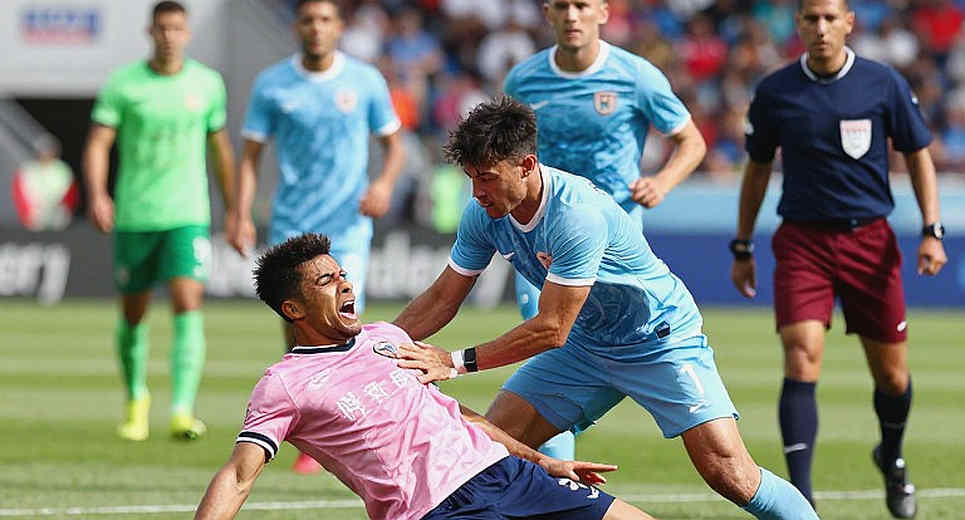
I watched the clips frame by frame. For the first twenty minutes at Jakarta's Gelora Bung Karno, Manchester United Legends and North London Legends moved like former colleagues meeting at a weekend barbecue. Passes were slow, the ball stuck to feet, nobody wanted to run into the space behind the defensive line. Then the score crept toward 2-2, and the picture changed. Tackles hardened, arms went up at the referee, the bench started shouting.
Dwight Yorke described exactly that moment. In a report carried by VIVA citing Antara, he said the match 'starts relaxed and friendly, but then becomes a bit hard on the field.' Yorke thinks this is a story about emotion. I think it is a laboratory — one variable changed, and that variable was the crowd.
I started counting sprints because the broadcast only showed the finish. In May 2026, watching Dortmund's 4-0 win over Schalke in an empty stadium, I learned the same lesson: pressing triggers arrive late when the stands are silent. In Jakarta the stands were not silent. But the legs were sixty years old. So the press came back for twenty minutes, then faded.
Let us clear the backdrop, because in this kind of report the backdrop is the actual information. The event was branded 'Champions Impact in Jakarta: The Rivalry Returns.' The venue was Gelora Bung Karno, Indonesia's largest football stage. The teams were United Legends and North London Legends. The result was 2-3. Yorke's explanation for the defeat: the opponent was 'superior in exploiting opportunities.'
It is worth stating plainly what a legends match is, because many readers mistake it for an ordinary friendly. A legends fixture is an exhibition built around retired players, with rolling substitutions, deliberately low intensity, and entertainment, brand promotion and commercial revenue as the primary purpose. There is no points table, no registration window, no continental eligibility. Judging this event through a Premier League lens is measuring with the wrong instrument.
Here is my first objection. Yorke's explanation contains no tactical information. No formation, no pass counts, no high turnovers, no pressing triggers. If I sat down and wrote 'United Legends' build-up structure,' I would be writing fiction, not journalism. I built a lab because one transfer fee broke my brain — a place where you gather numbers before you make a claim. Here the number itself is missing. All that exists is a scoreline and a smile.
The United-Arsenal rivalry is one of the most marketable products in Premier League history. Ferguson against Wenger — the fans who watched that fight in the nineties and early 2000s are now aged 35 to 55. This event was built for precisely that demographic. Yorke himself said the rivalry still carries 'a nuance of competition.' He is right, but that is emotion, not competition.
This is where the transfer window enters. On the day this report runs, European clubs are negotiating release clauses, wage bills and sell-on percentages. The Jakarta match is not on any page of that ledger. A legends fixture has no points, no registration window, no PSR impact. It is not football — it is football's brand.
So what is actually being sold in Jakarta? In one line: an ex-player's career capital. Dwight Yorke is no longer a footballer; he is an ambassador. The Antara-sourced report introduces him as 'an important player for Manchester United in the Sir Alex Ferguson era.' That identity is his visa, and that identity is his fee.
Be honest about the economics: the report discloses no ticket revenue, no appearance fee, no promoter identity. So I cannot say who earned what. But the model is familiar — a promoter runs the event, clubs license their marks, ex-players collect appearance fees, and money circulates through tickets, merchandise and sponsorship. The transfer market is a rumor mill with a receipt problem, and in the legends-tour business the receipt is even fuzzier.
Then comes the Southeast Asian market. Indonesia is one of the most football-obsessed countries on earth, yet for European clubs it has long been an under-served market. Manchester United and Arsenal hold two of the largest fan bases in the region. The pairing is not accidental; it is chosen by arithmetic. Two clubs' legends squads, the biggest venue, the most emotional rivalry's name — this is nostalgia, exported.
The rivalry is itself a recycled asset. The Ferguson-Wenger intensity is gone from the pitch, but the memory still sells. For the fan who was a teenager in the nineties, the phrase 'United versus Arsenal' is a sensation — and the promoter is selling exactly that sensation at the ticket gate.
Now my tactical objection. I have always been sceptical of the three-at-the-back revival — it is not progress, it is a comfortable way for managers to dodge the reputational risk of an exposed back four. Legends matches carry the same comfort: you can lose and lose nothing in the table. Yorke smiles after a 2-3 defeat because that defeat carries no job, no salary, no pressure.
Biomechanics is the most interesting layer here. In a legends match, sprints above 30 km/h sit close to zero — because the acceleration curve flattens with age, deceleration worsens further, and the hamstring's capacity to absorb load drops. So the 'hard' match Yorke describes is really a conflict between brain and legs: the brain knows the score is 2-2, the legs know it is a friendly.
That conflict is the signature of legends football. The emotion is real, but its sustainable capacity is limited. If who wins is a decision, it must be made with leg data, not brain emotion.
And this is where the real transfer market comparison lands. Competition between elite clubs is largely a brand race — buying a name means a million shirts and a hundred million impressions. The real value hunting happens at smaller clubs, where scouts read the gaps in release clauses, weigh wage-bill balance, and read a 23-year-old's acceleration curve to forecast a future. The Jakarta match sits exactly between those two worlds — enormous brand on one side, zero competition on the other.
The media narrative deserves the same candour. The headline promises a 'hot MU vs Arsenal rivalry.' The body delivers no live rivalry at all — just a warm quote from one ex-player and a 2-3 friendly. That is a headline over-promising, a small but real expectation-management risk. The sourcing chain — VIVA citing Antara, Indonesia's national news agency — is respectable for regional news, but the story's job is community engagement and event promotion, not hard news.
So here is my filter for readers drowning in window noise. Read any item and ask three questions: who is the source, what is the date, and whose pocket does the money reach? On the Jakarta story, the first two answers are partial and the third is entirely absent.
The bigger question for me is this: does the tour leave anything behind for Indonesian football, or does it only take? Coming from Bangladesh and sitting in Britain, I recognise the pattern. Young players from South Asia and Southeast Asia enter European systems through three doors — migration, positional scarcity, and the pricing logic of the global youth market. A legends tour opens none of them. It is for fans, not academies.
There is a narrow opportunity, though. Tours like this are often an early market-entry probe. Today a legends match, tomorrow a youth camp, then a regional partnership. If that happens, the kid shouting Yorke's name in the Jakarta stands may enter a scouting radar ten years from now.
One small but important factual warning. The report dates the fixture Saturday, 10 October 2026. The weekday and date are internally consistent. But if the report was published before that date, it is not a post-match report — it is promotional copy. You cannot reach a verdict without checking the receipt.
Now I argue against myself. First, I assumed the 'hard' phase was driven by the scoreline. There is an alternative: the crowd. Jakarta's stands were full, and in 2026 I learned that a crowd is itself a pressing cue. In empty stadiums the press vanished; here the physical response returned with the noise. Perhaps the emotion came from sound, not memory.
Second, I said this is not football but a brand. The reverse may also be true. In the global football economy, a growing share of club revenue now comes from exactly this kind of tour and regional engagement. If so, the legends tour is not outside 'real football' — it is now part of it. What I call hollow may be the centre of the economy.
Third, I said the event gives Indonesian football nothing. That is incomplete. A full stadium, national news agency coverage, brand recognition among children — these raise local football's visibility, even indirectly. Denying indirect effects is unfair to the data.
Still, my core objection holds: this match contains no competitive information, so its tactical value is zero. The eye test is a witness, not a judge — and this witness testifies only that the crowd was beautiful and the legs were tired. Every hot take deserves a spreadsheet, a stopwatch, and a second look; this match fails at the first of the three.
So a testable prediction. If Jakarta really is a market-entry probe, we will see at least one official club announcement within 12 to 18 months — a youth camp, an academy partnership, a regional commercial deal. If nothing comes, it was one night of nostalgia, and the Jakarta crowd was a rented gallery.
The question remains: are we watching football, or a billboard wearing football's name? Football is a sport of gaps: the ones players run into and the ones analysts miss. This match had far more of the second kind.

Related Players
Recommended
Grass Is Not Matchday: Ferland Mendy's Five Months, Real Madrid's Left Flank, and the Shadow of a Wrong Name2026-10-11
Messi Assist, De Paul Goal: The Fracture Inter Miami's 2-0 Scoreline Hides2026-10-16
When the Label Lies: Sindh's Mental-Health Report, a False Football Tag, and the Silent Gap in the Data Pipeline2026-10-14
The First Number Didn't Add Up: Indonesia's 2-0, the Diaspora XI, and Herdman's Invisible Ledger2026-09-27
Two Words of Football: Sebastián Cáceres's Unwritten Transfer and the Ledger of a Label2026-09-28
De Ligt's Year: Back Surgery, a Missed World Cup, and the Questions Nobody Is Asking2026-09-30
Recommended
Analysis of Insufficient Information in the Football Domain: A Methodological Review2026-10-14
A Thread in the Mud, the First Knot: A New Chapter for Women's Football Begins in Rangpur2026-09-26
Rijeka, Nine Silent Teammates and a Translator: The Real Ledger Behind British Youngsters Going Abroad2026-10-01
Pakistan-Saudi-Türkiye 'Makkah' Pact: The Pledge to Defend Saudi Arabia and Strategic Silence2026-10-02
The Match That Was Never Played: A Wrong Tag, A Hidden Story2026-10-13
Behind the 0-0: Gabriel Pereyra's Punch, the Cruz Azul Brand, and a Second Division's Credibility Crisis2026-10-04
No Verdict, Yet a Verdict: Manchester City's 'Guilty' Headline and Klopp's Real Test2026-10-01